Car Headlights: A Complete Guide to Types & Technologies
Car headlights are essential to nighttime driving, providing the illumination needed to recognize road conditions, identify potential hazards, and navigate safely when natural light is limited. From traditional Halogen bulbs to modern LED and Laser systems, automotive headlight technology has evolved to offer greater efficiency, more precise light distribution, and increasingly sophisticated lighting functions.
However, effective headlights are not simply about producing brighter light. The type of light source, optical design, beam pattern, color temperature, and driving conditions all influence how well a lighting system performs on the road.
Understanding these elements can help drivers make more informed decisions about their vehicle's lighting. Explore the world of car headlights with AOZOOM to understand the different technologies, how they work, and what to consider when choosing or upgrading your lighting system.
What Are Car Headlights and How Do They Work?
Car headlights are forward-facing lighting systems designed to illuminate the road ahead, helping drivers maintain visibility in darkness and other low-light conditions. They also make vehicles more noticeable to other road users, contributing to safer nighttime driving.
The basic operating principle is relatively straightforward. A light source generates illumination, while an optical system collects, shapes, and directs the light toward specific areas of the road. Electrical and control components regulate how the headlights operate.
The resulting beam pattern determines how far the light reaches, how widely it spreads, and how effectively it illuminates the driver's field of view.
Modern headlights use different technologies to achieve these functions, but they share the same fundamental objective: providing sufficient road illumination while controlling unwanted glare.
Main Components of a Car Headlight System
A typical car headlight system consists of four main components that work together to produce controlled illumination.
Light Source
The light source generates the illumination. Depending on the headlight technology, it may use a heated tungsten filament, an electrical discharge, semiconductor LEDs, or a laser-excited phosphor system.
Different light sources have different characteristics in terms of efficiency, heat generation, operating life, and light output.
Optical System
The optical system controls how light travels from the source to the road. It may use reflectors, projector lenses, shields, or other optical elements to establish the desired beam distribution.
Its design influences important lighting characteristics, including beam width, concentration, uniformity, and glare control.
Housing and Lens Cover
The housing supports and protects the internal components, while the outer lens cover allows light to pass through and helps protect the assembly from environmental exposure.
A damaged housing or deteriorated outer lens can reduce lighting effectiveness, even when the light source itself remains functional.
Electrical and Control Components
Electrical components provide and regulate the power required for illumination.
Simple systems may use conventional wiring and switches, while HID and LED headlights require dedicated ballasts or electronic drivers.
Advanced lighting systems may also integrate sensors, control modules, and software to adjust illumination according to driving conditions.
Together, these components determine the headlight's overall performance. A powerful light source cannot compensate for poorly designed optics, inadequate cooling, or incorrect installation.
Low Beam vs High Beam
Car headlights generally provide two primary lighting functions: low beam and high beam.
Low beams, also known as dipped beams, are designed for normal nighttime driving, especially when other vehicles are nearby. They produce a controlled light distribution that illuminates the road while limiting excessive light directed toward oncoming drivers.
High beams, also called main beams, provide illumination farther down the road. They are particularly useful on dark, poorly lit routes where greater forward visibility is needed.
Unlike low beams, high beams are not intended to maintain the same glare-limiting light distribution. Drivers should switch back to low beams when approaching oncoming vehicles or following other road users at a distance where glare may affect them.
The essential difference lies in how the light is distributed: low beams prioritize controlled road illumination, while high beams provide extended forward visibility when traffic conditions allow.

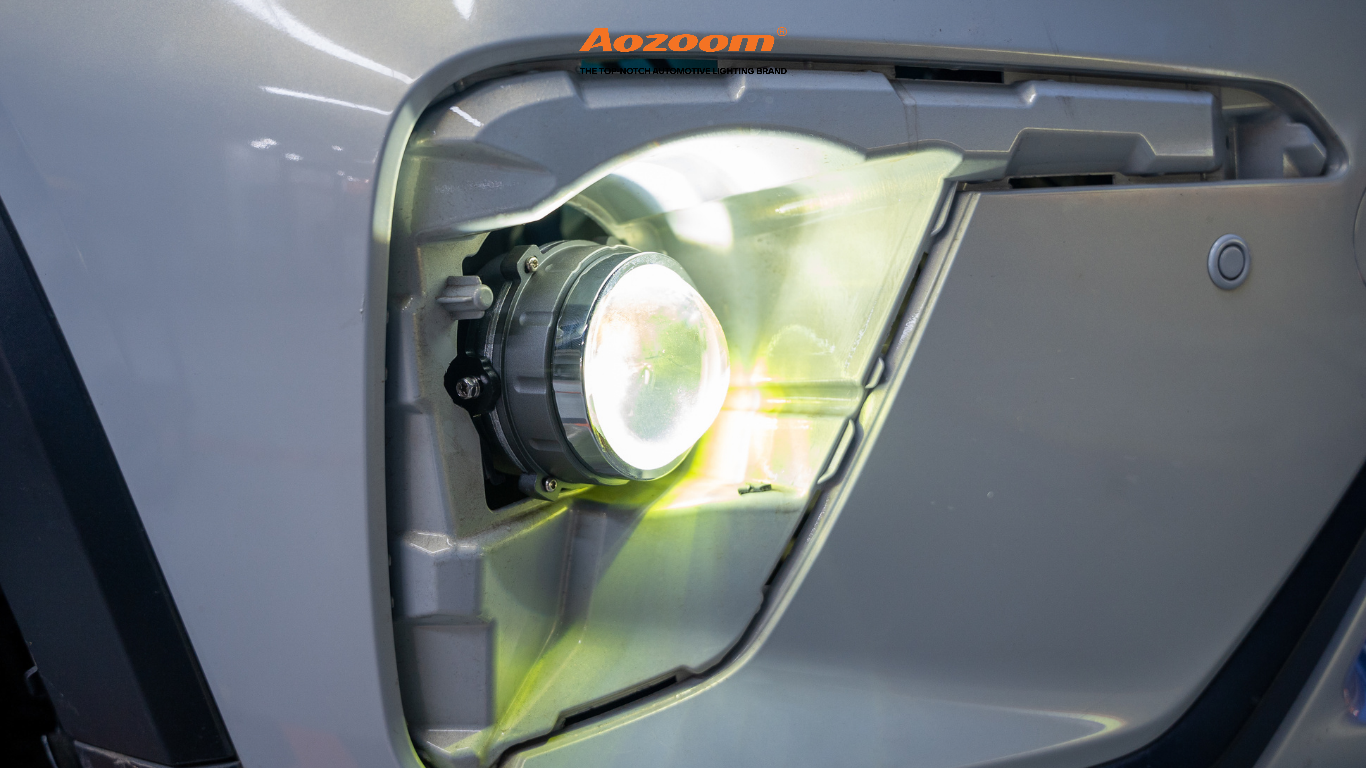
Car headlights are forward-facing lighting systems designed to illuminate the road ahead
What Are the Different Types of Car Headlights?
Car headlights are commonly classified according to the technology used to generate light. The four major types are Halogen, HID/Xenon, LED, and Laser headlights.
Each technology operates differently and offers distinct advantages in efficiency, durability, lighting characteristics, and cost.
Halogen Headlights
Halogen headlights are one of the most established technologies in automotive lighting.
They generate light by passing electrical current through a tungsten filament enclosed inside a glass bulb containing halogen gas. As the filament heats up, it emits visible light.
Their simple construction makes Halogen headlights relatively affordable and straightforward to maintain. Replacement bulbs are widely available, and many vehicles were originally designed around Halogen lighting systems.
However, Halogen technology is less energy-efficient than modern HID and LED alternatives because a substantial portion of the electrical energy is converted into heat rather than visible light.
The filament also deteriorates with use, resulting in a generally shorter operating lifespan than properly engineered LED systems.
Nevertheless, Halogen headlights remain a practical option for vehicles designed to use them, particularly when replacement cost and ease of maintenance are priorities.
HID / Xenon Headlights
High-Intensity Discharge (HID) headlights, commonly known as Xenon headlights, produce light through an electrical discharge rather than a heated filament.
An electrical arc forms between electrodes inside a gas-filled discharge tube, generating intense illumination. A ballast provides the voltage needed to ignite the arc and regulates power during operation.
Compared with conventional Halogen technology, HID headlights typically offer higher luminous efficiency and greater light output.
These characteristics helped establish HID systems as a premium lighting option before LED headlights became widespread.
However, HID systems have certain limitations. They require dedicated electronic components, are more complex than Halogen systems, and generally need a short warm-up period to reach stable operating brightness.
The final lighting performance also depends heavily on the optical system. Installing HID bulbs in a housing not designed for them can create an uncontrolled beam pattern and excessive glare.
For this reason, HID headlights should be evaluated as a complete lighting system rather than simply as a brighter replacement bulb.
LED Headlights
Light-Emitting Diode (LED) headlights generate light through electroluminescence in semiconductor materials.
Unlike Halogen bulbs, LEDs do not rely on a heated filament. This allows properly engineered LED systems to provide high energy efficiency, rapid illumination, and potentially longer operating life.
LED technology also offers greater design flexibility.
Compact LED emitters can be integrated into various optical configurations, from conventional reflectors to projector modules and adaptive lighting systems.
These characteristics have made LEDs increasingly common in modern automotive headlights.
However, LED performance is not determined by the light-emitting chips alone.
Electronic drivers regulate electrical operation, while thermal management systems control the heat generated during use. Meanwhile, the optical assembly determines how effectively the light reaches the road.
A poorly designed LED headlight can produce uneven illumination or excessive glare, regardless of its advertised brightness.
Similarly, replacing a Halogen bulb with an LED bulb does not automatically improve the original headlight's beam pattern.
The effectiveness of LED headlights depends on the compatibility and engineering of the complete lighting system.
Laser Headlights
Laser headlights are an advanced automotive lighting technology primarily associated with supplementary long-range high-beam illumination.
In a typical automotive laser lighting system, laser diodes emit concentrated blue light toward a phosphor conversion element. The phosphor converts the energy into visible white light, which is then shaped and directed through the optical system.
The original laser beam is not projected directly onto the road.
Laser-assisted technology can support highly concentrated illumination over longer distances, making it particularly relevant to certain high-beam applications.
In many vehicle designs, laser lighting operates alongside LEDs rather than replacing them entirely. The LED system provides the main low-beam and high-beam functions, while laser assistance supplements long-range illumination under appropriate conditions.
These systems require sophisticated optical, electronic, and thermal engineering, contributing to their higher cost and complexity.
Although laser-assisted headlights can offer impressive long-range capability, they are not automatically the best choice for every driver.
For regular city driving, where low beams are used most frequently, a well-designed LED lighting system may already provide the necessary visibility.
Halogen vs HID vs LED vs Laser: Key Differences
The following comparison highlights the main characteristics of each headlight technology.
Criteria | Halogen | HID / Xenon | LED | Laser |
Light generation | Heated tungsten filament | Electrical discharge arc | Semiconductor electroluminescence | Laser-excited phosphor |
Energy efficiency | Generally lower | Higher than Halogen | Generally high | System-dependent |
Operating lifespan | Relatively short | Moderate to long | Potentially long | Depends on system design |
Start-up response | Immediate | Requires warm-up | Near-instant | Electronically controlled |
Lighting characteristics | Depends on optical design | Depends on optical design | Flexible beam control and design | Concentrated long-range support |
Typical cost | Low | Moderate | Moderate to high | High |
Common applications | Conventional headlight systems | Factory-equipped HID headlights | Modern OEM and compatible aftermarket lighting | Specialized high-beam systems |
Note: These are general characteristics. Actual headlight performance varies according to product design, optical quality, installation, and operating conditions.
While LED and Laser technologies provide advanced capabilities, newer technology does not automatically guarantee better visibility.
A properly designed Halogen or HID headlight can outperform an unsuitable or poorly aligned LED replacement in practical road illumination.
This is why evaluating the complete lighting system is more useful than selecting a headlight based only on its light source.

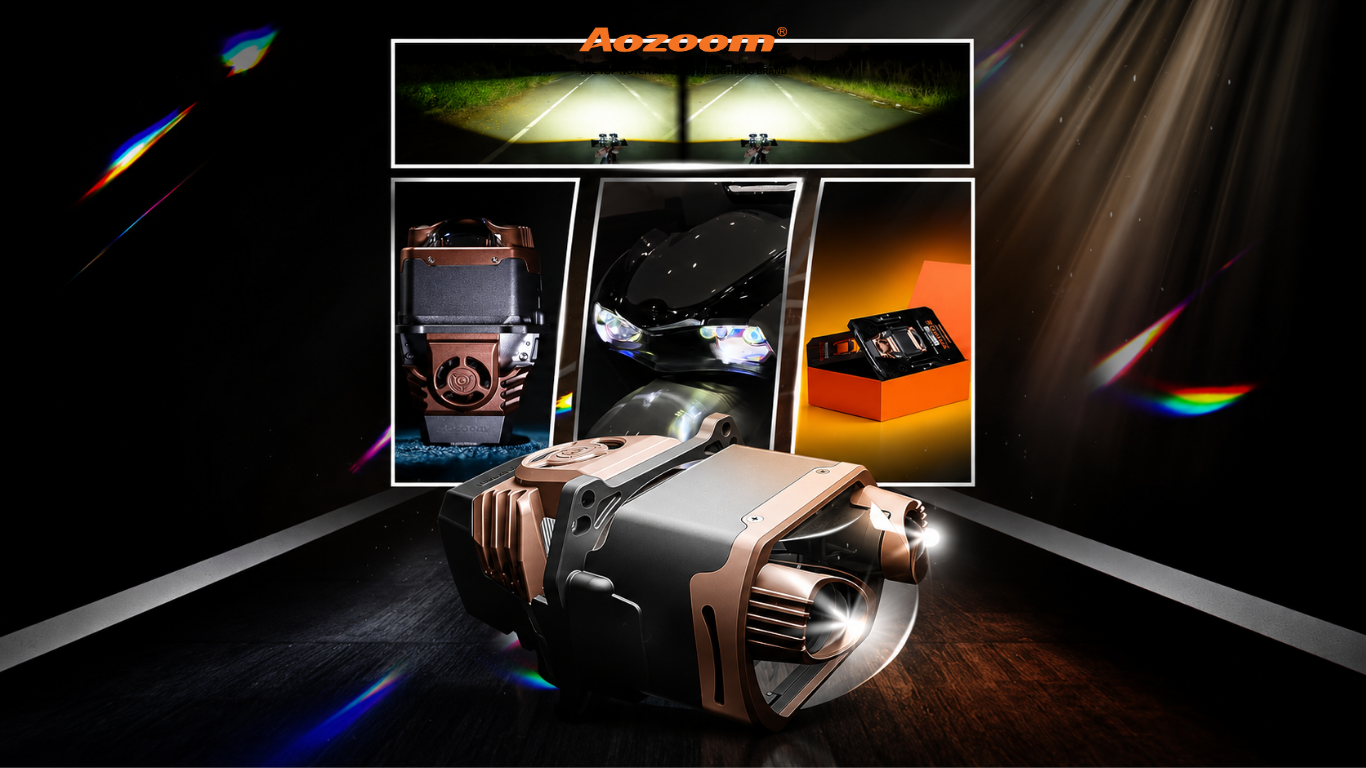
Car headlights are commonly classified according to the technology used to generate light
Headlight Designs and Optical Technologies Explained
A headlight's light source determines how illumination is generated, but its optical system determines how that illumination is distributed onto the road.
Two headlights using the same light-source technology can produce significantly different beam patterns because of their optical design.
Understanding this distinction is essential when comparing modern automotive lighting solutions.
Reflector vs Projector Headlights
Reflector and projector headlights are two common optical designs used to control road illumination.
Reflector Headlights
Reflector headlights use a shaped reflective surface to redirect light from the source toward the road.
The reflector's geometry and the precise position of the light source determine the resulting beam pattern.
Reflector designs can provide effective illumination with relatively simple construction and lower manufacturing costs.
However, their performance depends on the relationship between the light source and reflector. Using a replacement bulb with different emitting characteristics can alter the intended distribution.
Projector Headlights
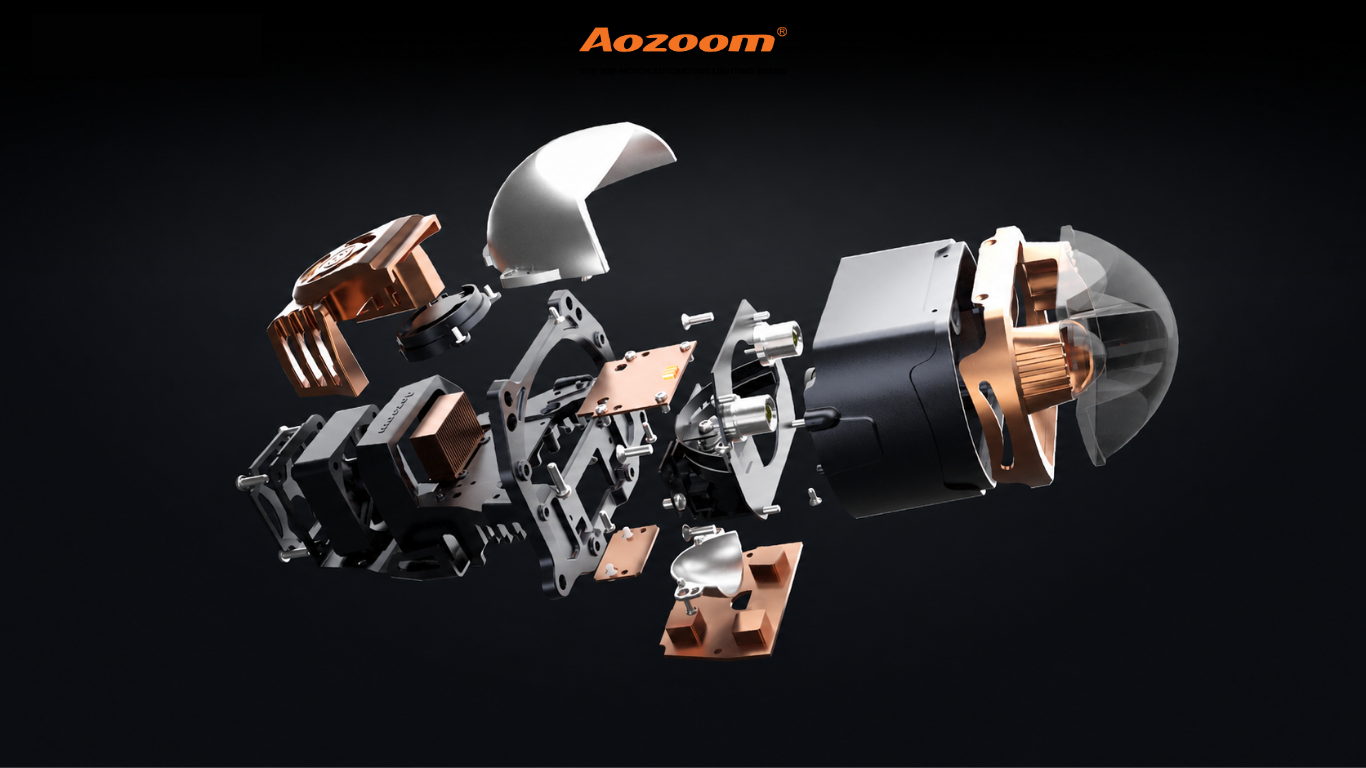
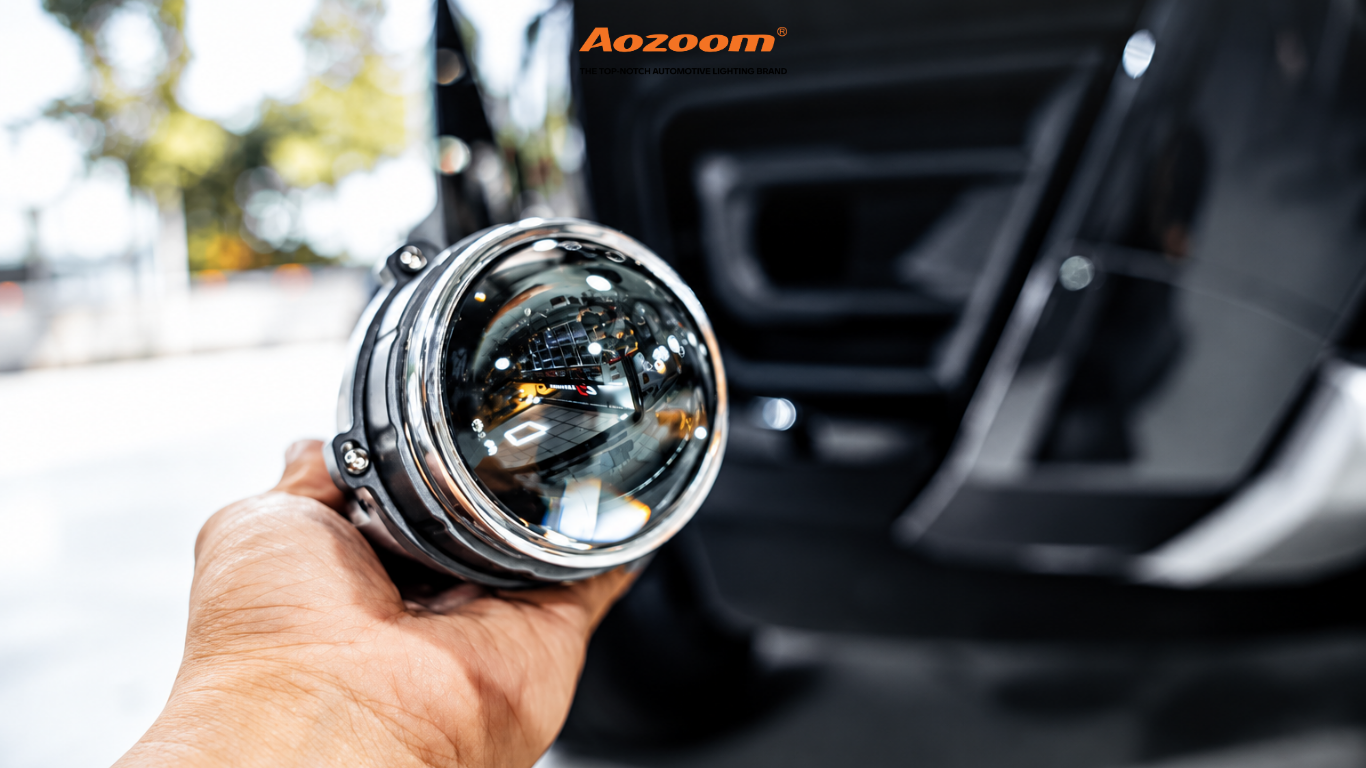
Projector headlights use a more compact optical assembly, commonly combining a reflector, a lens, and additional beam-shaping elements.
In many low-beam projector systems, a shield helps establish the cutoff boundary, while the optical components direct illumination toward the required road areas.
A well-designed projector can provide precise light distribution, effective beam control, and a defined cutoff.
However, projector headlights are not automatically superior to reflector designs. Both systems can perform well when correctly engineered.
The key distinction is that reflector and projector describe optical designs, while Halogen, HID, and LED describe light-source technologies.
For example, an LED headlight may use either reflector or projector optics.
Bi-LED and Bi-Laser Projector Headlights
Bi-LED and Bi-Laser projector systems combine advanced light sources with dedicated optical structures to provide low-beam and high-beam functions.
Bi-LED Projector Headlights
A Bi-LED projector uses LEDs as its main light source and provides both low-beam and high-beam illumination within one module.
Depending on the design, the system may use a movable shield, separate LED emitters, or different optical arrangements to switch between beam functions.
Because the light source and optical components are engineered as one module, a well-designed Bi-LED projector can provide controlled road coverage and effective beam distribution.
Bi-LED projectors are often considered for vehicles requiring a balance of low-beam visibility and high-beam performance.
Explore What Are Bi-LED Projector Headlights? to understand their structure, operating principles, and applications in more detail.
Bi-Laser Projector Headlights
Bi-Laser projectors generally combine LED illumination, projector optics, and laser-assisted high-beam technology.
The LED system provides the primary lighting functions, while the laser-assisted element contributes additional concentrated illumination to the high beam, depending on the module's design.
This approach is especially relevant when long-range visibility is a priority, such as nighttime driving on poorly lit highways.
However, Bi-Laser systems are not necessarily better than Bi-LED projectors in every situation. Their added complexity is most valuable when the driver regularly needs the additional high-beam capability.
For a closer look at how these systems operate, read Bi-Laser Projector Headlights: How Laser-Assisted High Beam Works.
Modern projector modules may also use different optical arrangements, including multi-surface reflectors and Total Internal Reflection (TIR) elements.
These designs help manage how light is collected, redirected, and concentrated to meet particular beam requirements.
Adaptive and Matrix LED Headlights
Adaptive headlights use electronic control systems to adjust illumination according to driving conditions.
Depending on the vehicle, adaptive lighting may respond to steering angle, vehicle speed, road curvature, or detected traffic.
Some systems adjust the direction of the light beam to improve visibility when turning, while others modify light distribution automatically.
Matrix LED headlights represent a more advanced approach that uses multiple individually controlled LED segments.
By adjusting selected segments, a compatible matrix system can reduce illumination in areas occupied by other vehicles while maintaining light in surrounding areas.
This helps improve the use of high-beam illumination without directing unnecessary glare toward detected road users.
Matrix LED technology is an example of how headlight development has moved beyond the traditional choice between fixed low and high beams.
However, the available functions depend on the vehicle's hardware, sensors, software, and regional regulatory requirements.

Headlight Designs
Understanding Other Front Car Lighting Systems
Although headlights provide the main forward illumination, modern vehicles may also include other front lighting systems designed for specific functions.
Fog lights, Daytime Running Lights (DRLs), and auxiliary lights complement the main headlights, but they are not interchangeable.
Fog Lights
Fog lights are supplementary lamps generally mounted lower on the front of a vehicle.
They are designed to provide a relatively wide, low-directed beam that illuminates the road surface and nearby edges in appropriate low-visibility conditions.
Unlike high beams, fog lights are not primarily intended to project light over long distances.
Their optical design and mounting position can help provide useful illumination in fog, mist, and certain other conditions where visibility is reduced.
However, fog lights do not automatically improve visibility in every rain or fog situation. Their effectiveness depends on beam design, alignment, mounting position, and weather severity.
Drivers should use fog lights only when appropriate and in accordance with local regulations.
Daytime Running Lights (DRLs)
Daytime Running Lights are designed primarily to make vehicles more noticeable to other road users during daylight hours.
Unlike conventional low-beam headlights, DRLs focus on vehicle conspicuity rather than illuminating the road ahead.
Many modern vehicles activate DRLs automatically while the vehicle is operating.
Although they can improve daytime visibility to others, DRLs are not a substitute for headlights when driving at night or in poor visibility.
Drivers should ensure that the appropriate headlights and rear lighting are activated when road conditions require them.
Auxiliary and Driving Lights
Auxiliary lights provide additional illumination beyond the vehicle's standard headlight system.
They are commonly associated with SUVs, pickup trucks, off-road vehicles, and specialized work applications.
Depending on their design, auxiliary lights may produce a concentrated spot beam, a wider flood beam, or a combination of both.
Spot beams prioritize longer-distance illumination, while flood beams spread light across a broader area.
These characteristics can make auxiliary lighting useful for particular off-road environments, work sites, and other permitted applications.
However, auxiliary lights can also produce substantial glare if used improperly. Installation position, aiming, electrical compatibility, and local regulations must all be considered.
What Makes a Good Car Headlight?
A good car headlight provides useful illumination where the driver needs it while limiting glare and maintaining consistent performance.
Its effectiveness should be evaluated through several factors rather than a single specification such as wattage or advertised brightness.
Brightness, Lumens and Real-World Visibility
Brightness is often the first specification drivers consider when comparing headlights, but it does not fully describe real-world lighting performance.
Three measurements help explain the difference.
Watts (W) measure electrical power consumption. A higher-wattage headlight consumes more electrical power, but this does not necessarily mean it delivers more useful illumination.
Lumens (lm) measure luminous flux, or the total amount of visible light emitted by a light source or lighting system.
Lux (lx) measure illuminance, describing how much light reaches a given surface.
For headlights, illuminance distribution is particularly important because the driver needs light in specific areas of the road.
A high-lumen light source may perform poorly if much of its light is scattered outside the intended beam.
Conversely, an efficiently designed optical system can direct available light toward relevant road areas.
This distinction is reflected in the headlight evaluation approach used by the Insurance Institute for Highway Safety (IIHS), which assesses useful illumination on straight roads and curves while also evaluating glare.
In practical terms, the amount of usable light reaching the road matters more than brightness claims alone.
Beam Pattern, Cutoff Line and Glare Control
The beam pattern describes how a headlight distributes illumination across the road.
A well-designed beam provides suitable coverage at relevant distances while avoiding excessive bright spots, poorly illuminated areas, and uncontrolled upward light.
Beam Width and Distribution
Beam width affects how much of the road and roadside environment is illuminated.
Adequate lateral coverage helps drivers recognize lane boundaries, roadside objects, and potential hazards.
However, width must be balanced with sufficient forward illumination.
Hotspot
The hotspot is the area where light intensity is concentrated.
Its shape, position, and intensity influence how effectively the headlight illuminates particular distances ahead.
A stronger hotspot is not automatically better. The surrounding light distribution must remain useful and comfortable for the driver.
Cutoff Line
The cutoff line is the boundary separating the main illuminated area from the darker region above it in certain low-beam optical designs.
A properly formed cutoff helps control unwanted upward illumination.
However, a sharp cutoff alone does not guarantee good headlight performance. Beam intensity, alignment, and overall distribution are also important.
Glare Control
Glare occurs when excessive light reaches another road user's eyes, potentially reducing visual comfort or visibility.
Correct optical design and headlight alignment help limit this problem.
Headlights that appear extremely bright when viewed from outside the vehicle are not necessarily providing better illumination for the driver.
For this reason, evaluating beam patterns is essential when comparing different lighting technologies.
Color Temperature and Driving Conditions
Color temperature describes the appearance of light and is measured in Kelvin (K).
It indicates whether a light source appears warmer, more neutral, or cooler in color.
Common automotive lighting color temperatures include:
Color Temperature | Light Appearance | General Characteristics |
Around 3000K | Warm yellow | Yellow-toned appearance, used in some fog-light applications |
Around 4300K | Warm white | White light with a warmer appearance |
Around 5000K | Neutral white | Balanced white appearance |
Around 6000K | Cool white | Cooler white appearance, sometimes with a slight bluish tint |
Higher color temperature does not mean greater brightness.
For example, a 6000K headlight is not automatically more effective than a 4300K or 5000K headlight.
Likewise, yellow light alone does not guarantee better visibility in rain or fog.
Visibility also depends on beam pattern, illuminance, road-surface reflections, atmospheric conditions, and the driver's visual response.
In markets such as the Philippines and Malaysia, where heavy rain and wet roads can create challenging driving conditions, controlled illumination and correct alignment deserve particular attention.
Rather than choosing solely by Kelvin rating, drivers should consider the complete lighting system and their typical driving environment.
Thermal Management and Durability
Effective thermal management helps headlights maintain stable operation and supports long-term reliability.
Every major automotive lighting technology generates heat, although the amount and location of that heat vary.
For LED headlights, controlling component temperature is especially important.
LEDs convert part of their electrical input into heat. If that heat is not managed effectively, elevated operating temperatures can reduce light output and accelerate component degradation.
Depending on the design, LED headlight systems may use heat sinks, thermal conductors, cooling fans, and electronic temperature-control mechanisms.
The effectiveness of these systems depends on the overall engineering and operating environment.
Headlight durability is also affected by moisture, dust, vibration, electrical conditions, and exposure to temperature changes.
Therefore, the reliability of a headlight should be assessed through the quality of its construction and system design rather than the advertised lifespan of its light-emitting components alone.

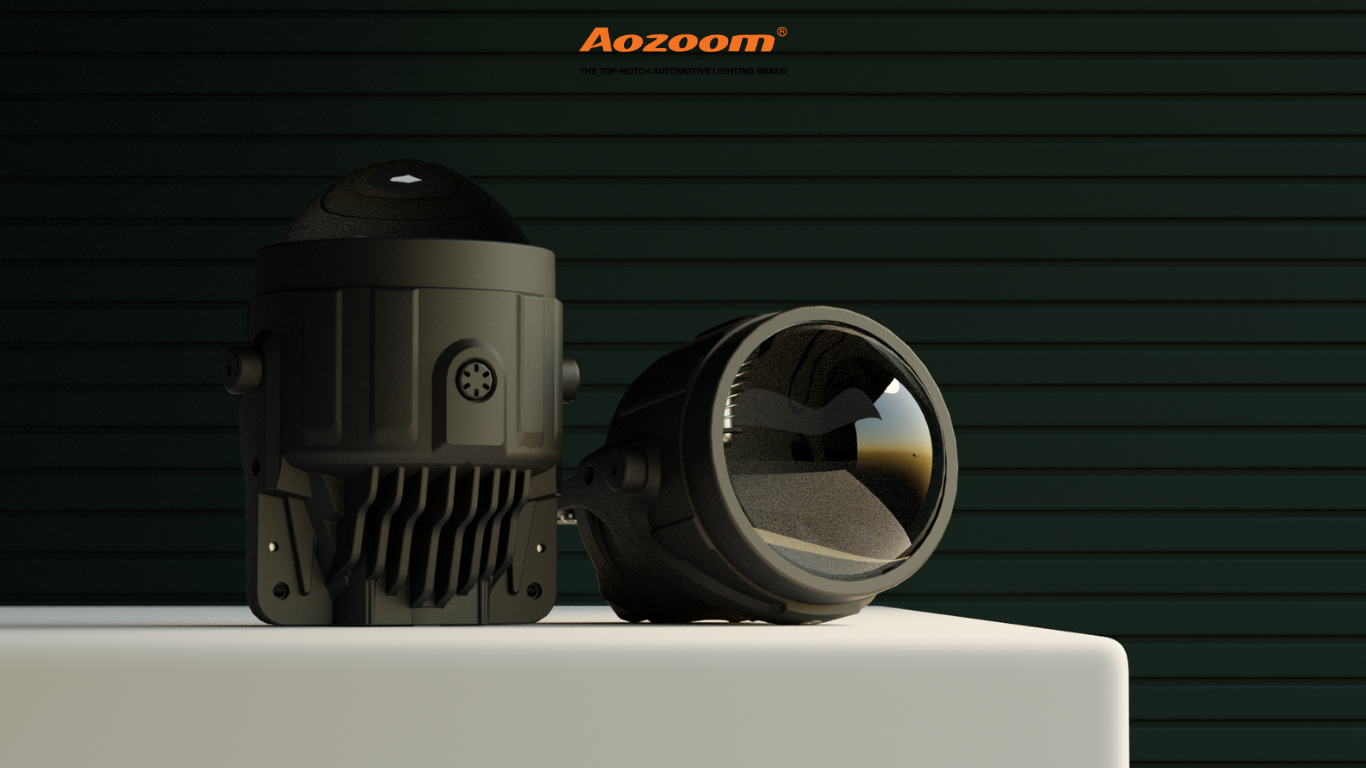
A good car headlight provides useful illumination where the driver needs it while limiting glare
How to Choose the Right Car Headlights
Choosing the right car headlights starts with understanding how the vehicle is used.
Different driving environments place different demands on beam width, forward illumination, glare control, and lighting durability.
The best solution is not necessarily the brightest or most advanced system. It is the one that provides appropriate illumination for the driver's needs while remaining compatible with the vehicle.
For Daily City Driving
City driving involves frequent interactions with other vehicles, pedestrians, cyclists, and intersections.
Because streets are often illuminated and traffic is relatively dense, controlled low-beam performance is particularly important.
Drivers should prioritize suitable road coverage, a consistent beam pattern, correct alignment, and effective glare control.
For many vehicles, a properly maintained original headlight system may already be adequate.
If an upgrade is necessary, a compatible LED solution or projector system may be considered, provided it meets the vehicle's technical and legal requirements.
For city use, extreme high-beam range is generally less important than reliable low-beam illumination.
For Highway and Long-Distance Driving
Nighttime highway and long-distance driving require effective forward illumination, particularly on roads with limited street lighting.
Drivers need to recognize curves, obstacles, road markings, and changes in road conditions at useful distances.
A well-designed headlight system should balance low-beam coverage with adequate high-beam performance.
LED projector systems can provide effective illumination for many highway applications.
Laser-assisted systems may offer additional long-range high-beam capability in suitable conditions, although this advantage is most useful when there are no other vehicles affected by the high beam.
For Rainy and Low-Visibility Conditions
Rain, mist, fog, and wet road surfaces can reduce visibility by scattering light and creating reflections.
Under these conditions, more light is not always better.
Excessive or poorly directed illumination may increase distracting reflections without improving the driver's ability to recognize the road ahead.
Drivers should prioritize a controlled low-beam pattern, correct aiming, and sufficient illumination of relevant road areas.
Fog lights may provide supplementary lighting when their beam characteristics and the prevailing conditions make them appropriate.
Color temperature may influence the appearance and perceived comfort of the light, but it should not be considered independently of the optical design.
When visibility becomes severely restricted, reducing speed and increasing following distance remain essential regardless of the headlights installed.
For SUVs, Pickups and Off-Road Driving
SUVs and pickup trucks may be used in different environments, from urban commuting to rural roads and off-road routes.
The most suitable lighting configuration depends on these applications.
For normal road use, controlled low-beam illumination and glare management remain essential.
On poorly lit roads, high-beam performance can become more important.
For suitable off-road or work applications, auxiliary lights may provide additional illumination through wider flood beams or more concentrated spot beams.
However, additional lighting must be compatible with the vehicle's electrical system and installed in accordance with relevant regulations.
Quick Guide: Choosing Car Headlights by Driving Conditions
Driving Conditions | Main Lighting Needs | Factors to Prioritize |
Daily city driving | Controlled nearby and forward visibility | Low-beam distribution, glare control, alignment |
Highway driving | Useful longer-distance illumination | Forward coverage, high-beam effectiveness |
Rainy and low-visibility conditions | Controlled illumination with limited distracting reflections | Beam pattern, aiming, suitable supplementary lighting |
Rural and poorly lit roads | Balanced forward and roadside illumination | Beam width, usable distance, reliability |
SUVs and off-road driving | Lighting matched to road and work conditions | Durable construction, suitable auxiliary beam patterns, compatibility |
This comparison provides a starting point, not a universal product recommendation.
Vehicle compatibility, legal requirements, and actual lighting performance should always be evaluated before selecting a replacement or upgrade.

Choosing the right car headlights starts with understanding how the vehicle is used.
When Should You Replace or Upgrade Your Car Headlights?
Car headlights can lose effectiveness over time because of component wear, aging bulbs, deteriorated lens covers, electrical problems, or incorrect alignment.
In other cases, a vehicle's original lighting system may no longer meet the driver's requirements.
However, reduced visibility does not always mean a complete headlight upgrade is necessary. Some problems can be resolved through maintenance or targeted repairs.
Signs Your Car Headlights Need Attention
Several symptoms may indicate that a headlight system requires inspection.
Reduced Illumination
Headlights that appear noticeably weaker than before may have aging bulbs, deteriorated optical components, cloudy outer lenses, or electrical problems.
Uneven Beam Distribution
Unexpected dark areas, irregular beam shapes, or substantial differences between the left and right headlights can indicate a problem with the optical system or its alignment.
Flickering or Intermittent Operation
Unstable lighting may result from electrical connections, drivers, ballasts, or other components requiring inspection.
Condensation or Physical Damage
Persistent moisture inside the housing, damaged lens covers, or compromised seals may affect lighting performance and durability.
Incorrect Beam Alignment
Headlights directed too high may create glare, while headlights aimed too low may provide inadequate forward visibility.
These symptoms should be investigated before assuming that a more powerful light source is the solution.
Common Headlight Upgrade Options
There are several ways to improve or restore a vehicle's headlight system, depending on its condition and original design.
Bulb Replacement
Replacing an aging or defective bulb with a suitable replacement can restore the intended illumination.
The replacement should meet the original system's electrical, optical, and regulatory requirements.
LED Bulb Upgrades
Where compatible and legally permitted, an approved LED replacement solution may offer different efficiency or lighting characteristics.
However, replacing a Halogen bulb with an LED bulb without confirming optical compatibility can produce an unsuitable beam pattern.
Projector Retrofit
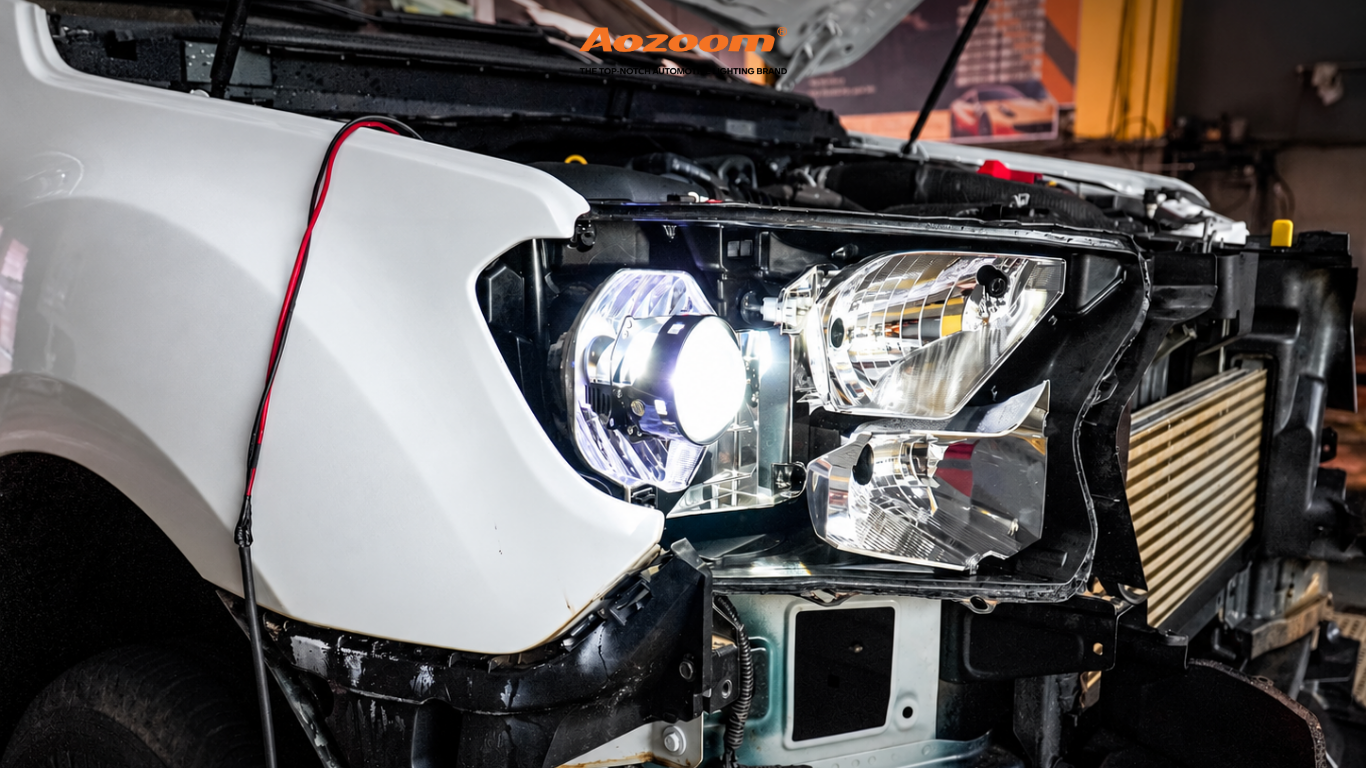
A projector retrofit involves installing a dedicated optical module into a compatible headlight assembly.
Depending on the design, it may provide more controlled beam distribution or additional lighting functionality.
Retrofitting requires professional assessment of installation space, electrical compatibility, mounting, sealing, and beam alignment.
Complete Headlight Assembly Replacement
For damaged assemblies or vehicles where internal modifications are unsuitable, replacing the entire headlight unit with a compatible approved assembly may be the more appropriate option.
Each approach has different technical requirements, costs, and limitations.
What to Check Before Upgrading
Before upgrading car headlights, drivers should evaluate several important considerations.
Vehicle Compatibility: Check the vehicle model, production year, original headlight design, available installation space, and electrical configuration.
Optical Performance: Evaluate the intended beam pattern and road illumination rather than relying exclusively on wattage, lumen claims, or visual appearance.
Electrical and Thermal Requirements: Ensure the proposed system can operate reliably within the vehicle's electrical and thermal conditions.
Installation and Alignment: Proper mounting, housing sealing, wiring, and beam aiming are essential for effective and responsible operation.
Local Regulations: Headlight modifications must comply with the applicable rules in the country where the vehicle is operated.
For drivers in the Philippines and Malaysia, compatibility with local road-use requirements should be verified before purchasing or installing aftermarket lighting components.
A suitable upgrade should address a genuine lighting need while maintaining vehicle compatibility, controlled illumination, and compliance with relevant regulations.

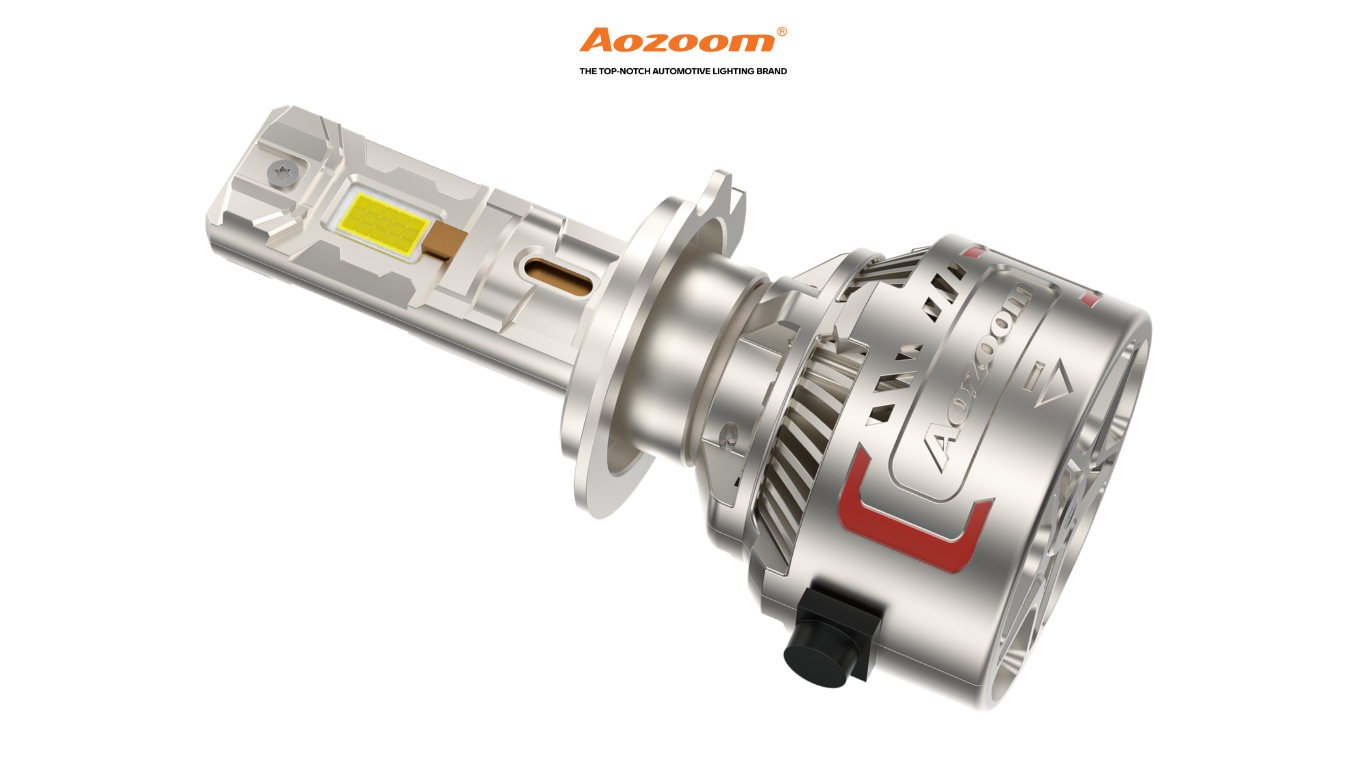
You should replace your car headlights when they burn out, grow dim, start to flicker
Conclusion
Car headlights have evolved from traditional Halogen and HID systems to modern LED and laser-assisted technologies, offering different possibilities for efficiency, optical design, and road illumination.
However, no single technology is automatically the best option for every vehicle or driving condition.
Effective automotive lighting depends on the relationship between the light source, optical system, beam distribution, thermal management, and correct installation.
Understanding these factors helps drivers evaluate their current headlights, recognize when maintenance or replacement is needed, and make informed decisions about potential upgrades.
At AOZOOM, automotive lighting solutions are developed around different optical technologies and practical driving requirements, from everyday low-beam visibility to specialized long-range and supplementary illumination.