When Should Drivers Upgrade to Laser Projector Headlights?
Laser headlights for cars are often associated with long-range visibility and advanced lighting performance. However, not every driver needs a laser projector upgrade. The real question is not whether laser projector headlights are more advanced, but whether they match the driver’s road conditions, night-driving habits, vehicle type and budget. This guide explains when laser projector headlights make sense, when they may be unnecessary and what drivers should check before upgrading.
What Are Laser Projector Headlights?
Laser projector headlights are automotive lighting systems designed to improve forward visibility, especially when high beam is used in dark driving conditions.
In many modern projector systems, LED lighting provides the main beam structure, while a laser-assisted unit supports the long-range high beam. This does not mean a raw laser beam is projected directly onto the road. Instead, the lighting system uses projector optics, lens design and beam control to direct usable light toward the driving area.
The key value of laser projector headlights is their ability to support a more focused high beam at longer distances. This can help drivers see farther ahead on highways, rural roads, mountain routes or poorly lit areas.
However, strong light is only useful when it is properly controlled. A good laser projector upgrade still needs a clear beam pattern, proper low-beam cutoff, stable high-beam focus, effective cooling and accurate installation.

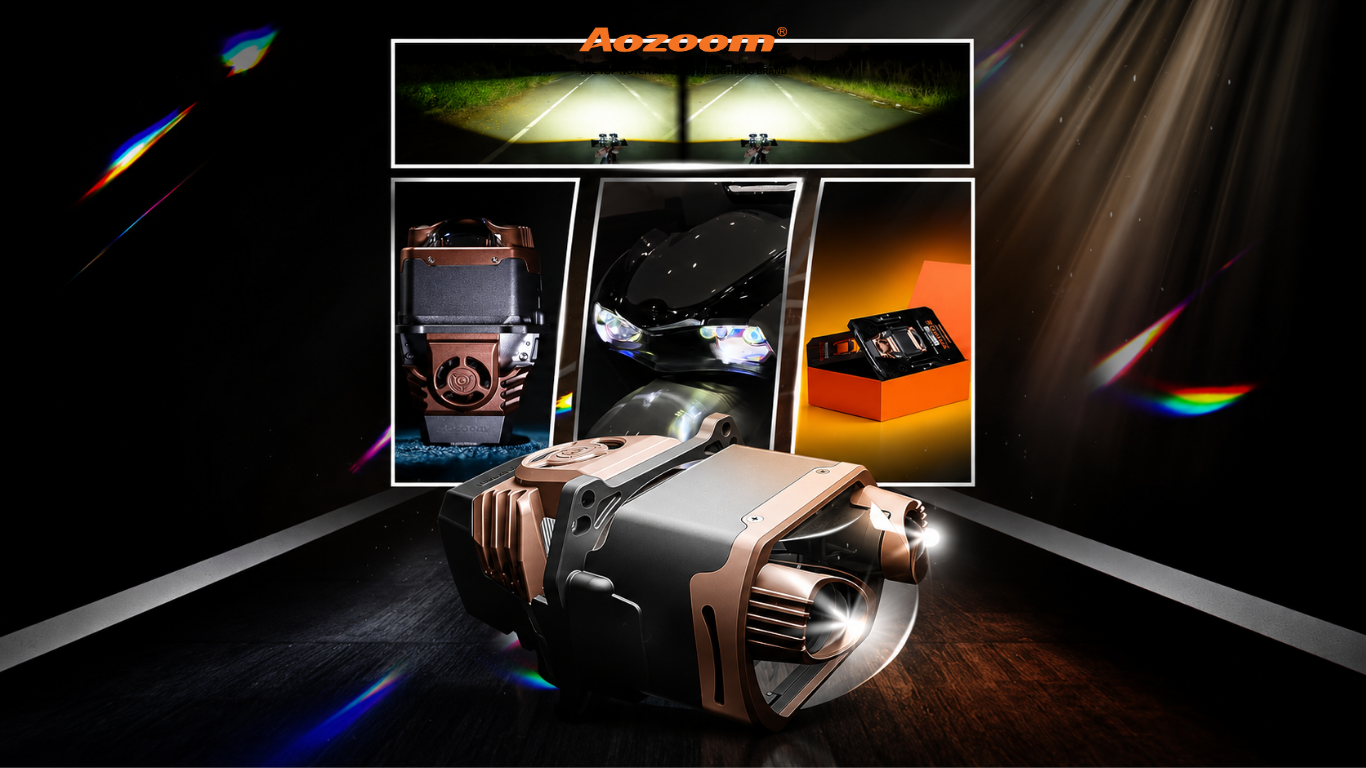
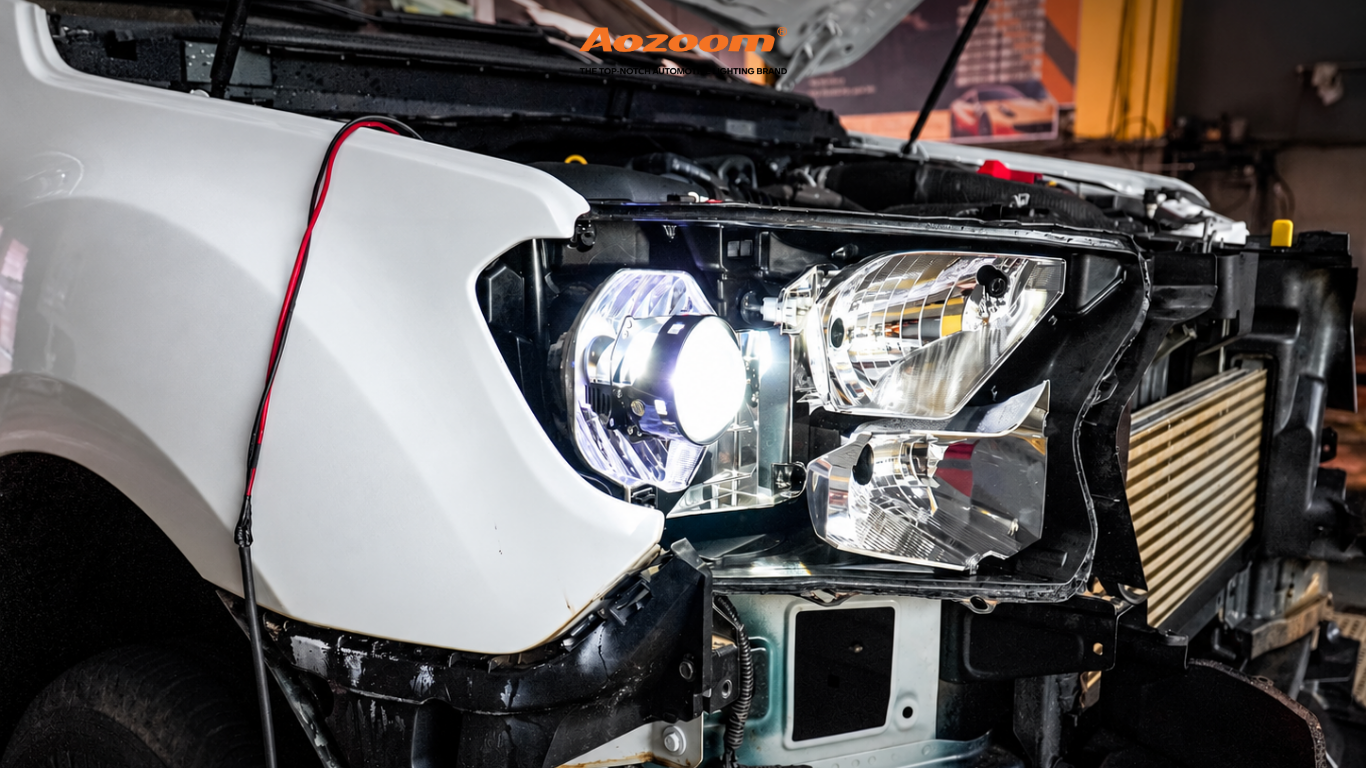
Laser projector headlights combine LED lighting with laser-assisted high beam for longer-range visibility
Signs Your Current Headlights May Need an Upgrade
Drivers usually begin considering an upgrade when their current headlights no longer support safe and comfortable night driving.
One common sign is difficulty seeing objects from a distance. If road signs, curves, lane edges or obstacles only become visible when the vehicle is already close, the current headlight system may not provide enough forward visibility.
Another sign is a weak or scattered high beam. High beam should help extend visibility ahead, but if it spreads unevenly or fails to create useful long-range focus, it may not support confident night driving.
Drivers who often travel on poorly lit roads may also notice the limits of their current lighting system. City streets may have enough surrounding light, but highways, rural roads and mountain roads require stronger and more controlled forward illumination.
A headlight upgrade may also be worth considering when the vehicle is used regularly for long-distance driving. At higher speeds, drivers need more time to recognize road conditions and react. If the current headlights do not provide enough visibility for highway or road-trip use, a projector upgrade may be helpful.

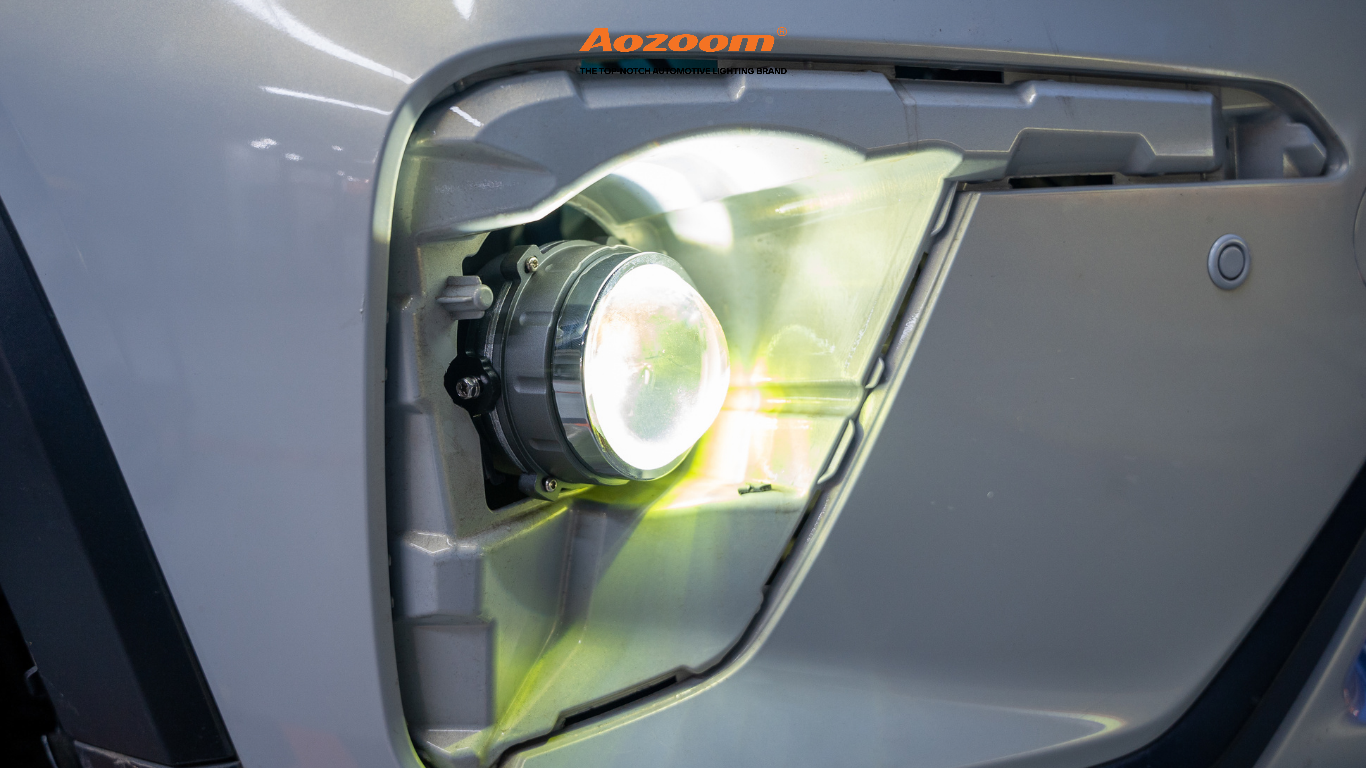
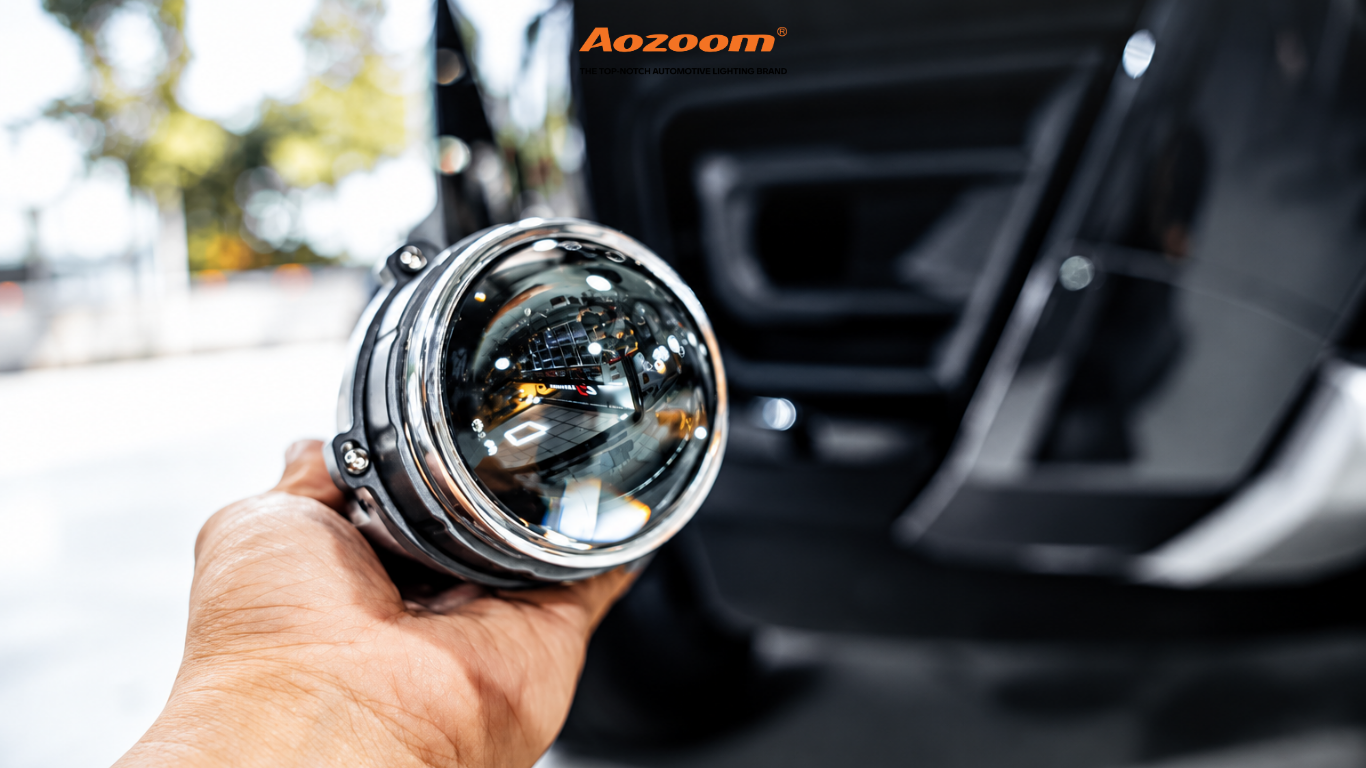
Weak or scattered headlights may signal the need for an upgrade
When Does a Laser Projector Upgrade Make Sense?
A laser projector upgrade makes the most sense when the driver has a real need for long-range high beam visibility.
It is suitable for drivers who frequently drive at night. When night driving is part of regular vehicle use, stronger and more focused lighting can improve confidence and reduce visual stress.
Laser projector headlights are also relevant for highway and long-distance driving. On highways, vehicles move faster, so the ability to see farther ahead can help the driver identify road signs, curves, obstacles and changes in road direction earlier.
Drivers who travel on rural roads, mountain roads or poorly lit routes may also benefit from laser-assisted high beam. These roads often have limited lighting and require better forward visibility than normal city driving.
SUV and pickup owners may consider this type of upgrade if their vehicles are often used for long trips, mixed road conditions or outdoor travel. These vehicles may benefit from stronger high beam performance, but vehicle type should not be the only deciding factor. A sedan used frequently on highways at night may also need stronger long-range lighting, while an SUV used mainly in the city may not.
Laser projector headlights are worth considering when the driver clearly needs high beam performance at longer distances and the vehicle can support the installation properly.

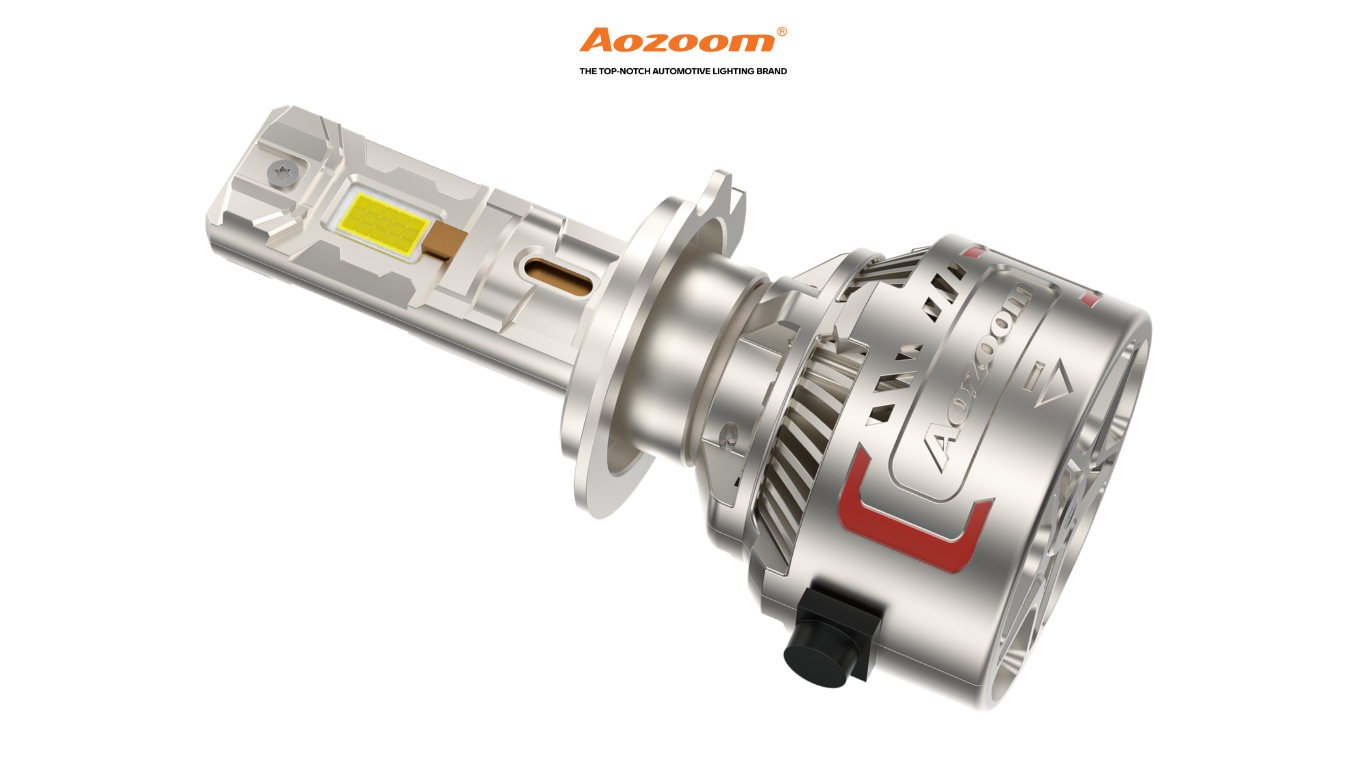
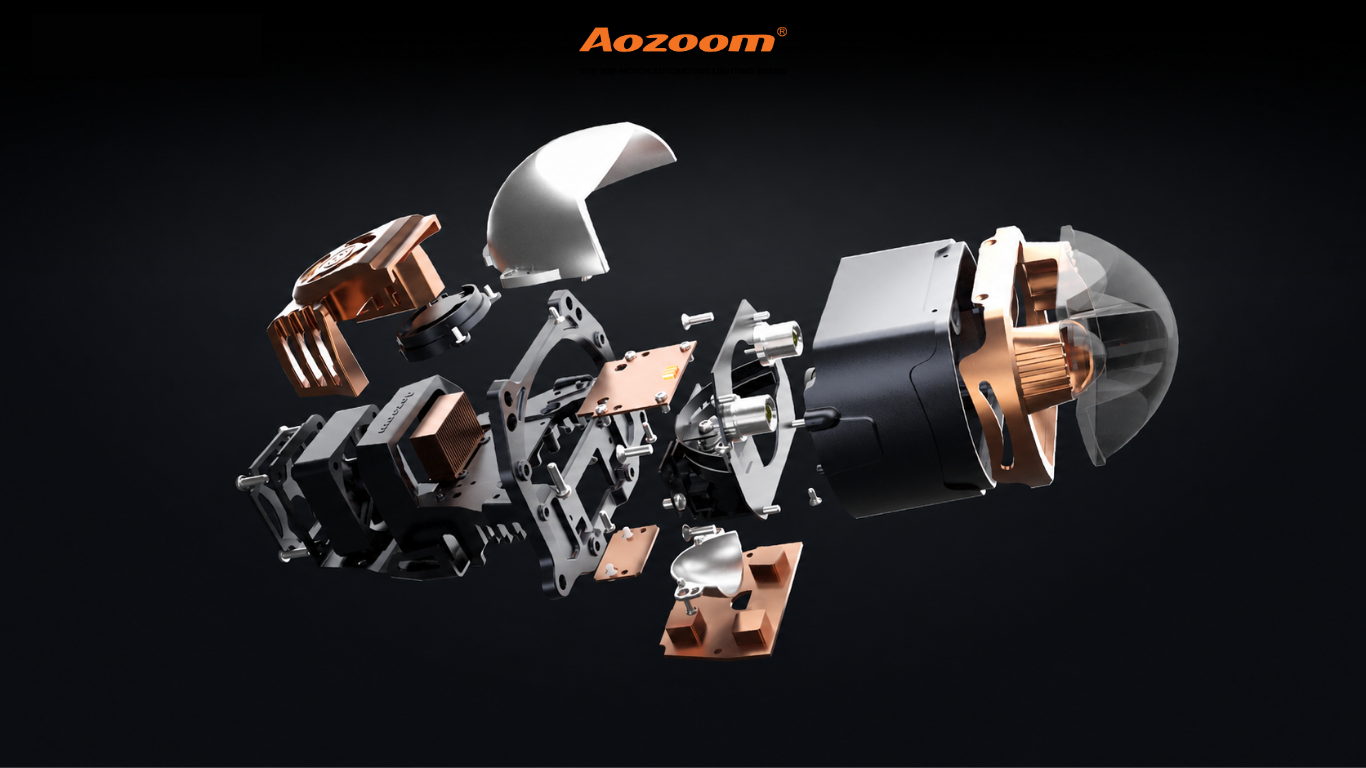
Laser projectors suit frequent night, highway and long-distance driving
When May Laser Projectors Be Unnecessary?
Laser projector headlights are not necessary for every driver.
If the vehicle is mainly used in the city, the benefit of laser-assisted high beam may be limited. Urban roads often have street lighting, traffic and nearby vehicles, so low beam quality and glare control may matter more than maximum high beam distance.
Drivers who rarely use high beam may also not need laser projector headlights. If most driving happens in well-lit areas, the long-range advantage may not be used often enough to justify the extra cost.
Laser projectors may also be unnecessary when the driver only wants to improve low beam performance. In that case, a suitable Bi-LED projector may already provide a balanced upgrade for daily driving, road coverage and beam control.
For drivers who prioritize a simpler installation or a lower budget, Bi-LED projector headlights can be a more practical choice. They can offer useful improvements without the additional complexity of laser-assisted high beam.
The key point is that laser projectors should be selected for a real driving need, not just because they sound more advanced.

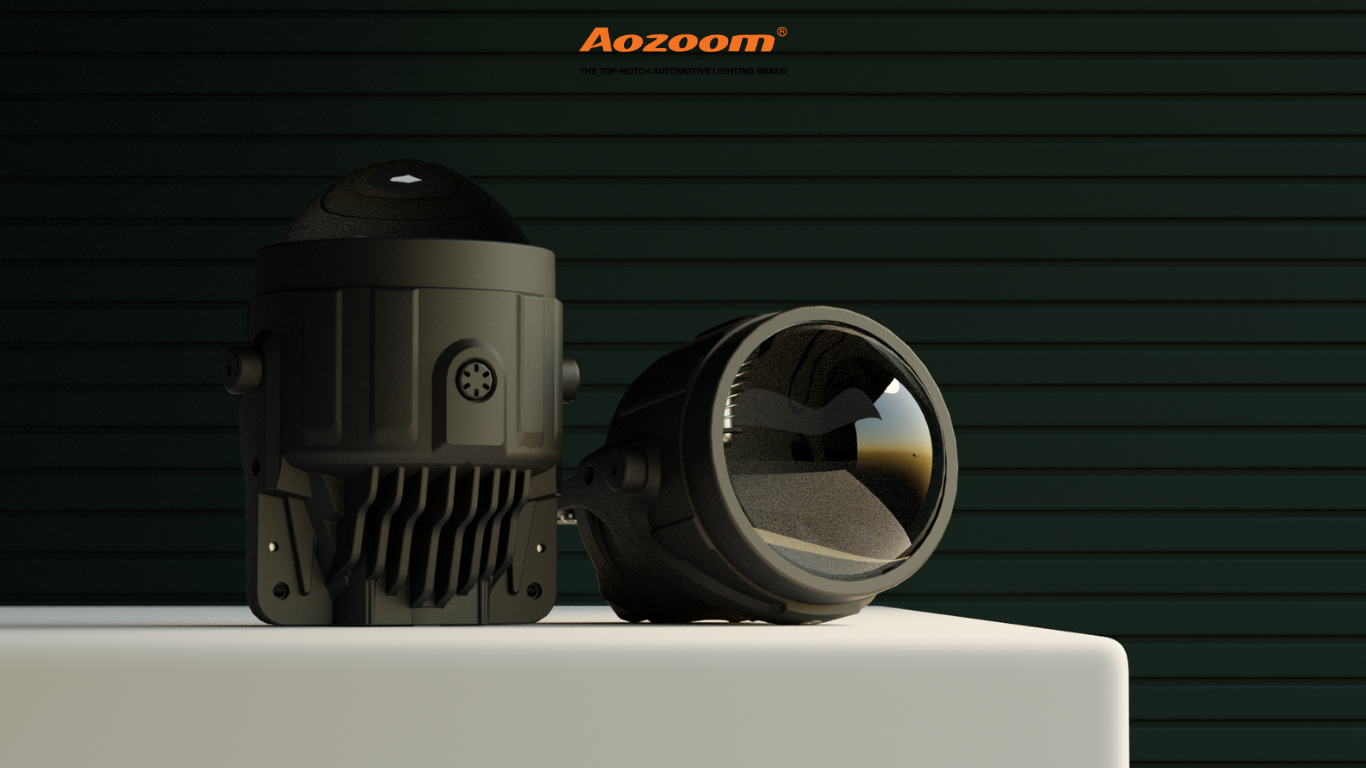
Laser projectors may be unnecessary for city driving or limited high-beam use
What Should Drivers Check Before Upgrading?
Before upgrading to laser projector headlights, drivers should check several practical factors.
Vehicle compatibility is the first consideration. Not every headlight housing can fit every projector. The installer should check the vehicle’s headlight structure, available space and mounting conditions.
Projector size and installation space are also important. Laser projector systems may require enough depth and suitable mounting points inside the headlight assembly. If space is limited, installation may become more difficult.
Beam pattern and low-beam cutoff should not be ignored. Even if the upgrade focuses on long-range high beam, the low beam must remain controlled and comfortable for daily use. A clear cutoff helps reduce glare for oncoming drivers.
Heat management affects long-term stability. High-performance lighting systems generate heat, so proper cooling is important for consistent operation during long drives.
Product and installation cost should also be considered. Laser projector upgrades often require a higher investment than simpler lighting upgrades. The value depends on how often the driver uses the long-range high beam advantage.
Finally, professional installation and aiming are essential. A capable projector can still perform poorly if it is not installed or adjusted correctly. Proper aiming helps ensure the light is focused on the road and does not create unnecessary glare.
Conclusion
Laser headlights for cars can be a valuable upgrade when the driver truly needs long-range high beam visibility. They are especially relevant for frequent night driving, highway use, long-distance routes, poorly lit roads and vehicles that regularly travel outside urban areas.
However, laser projector headlights are not required for every car. If the vehicle is mainly used in the city, if the driver rarely uses high beam or if the main goal is only to improve low beam, a suitable Bi-LED projector may already be a practical choice.