LED Headlight Bulbs: Types, Compatibility & How to Choose
LED headlight bulbs are a popular option for drivers looking to update their vehicle's lighting. Compared with conventional Halogen bulbs, LED technology offers efficient light generation, near-instant illumination, and a modern lighting appearance.
However, choosing the right LED headlight bulbs involves more than finding a matching socket or selecting the highest brightness rating. Bulb size, headlight housing design, beam pattern, electrical compatibility, and cooling performance all affect the final result.
For drivers in the Philippines and Malaysia, local vehicle lighting regulations are another important consideration.
This guide from AOZOOM explains the different types of LED headlight bulbs, what determines their quality, and how to check whether a particular replacement is suitable for your vehicle.
What Are LED Headlight Bulbs?
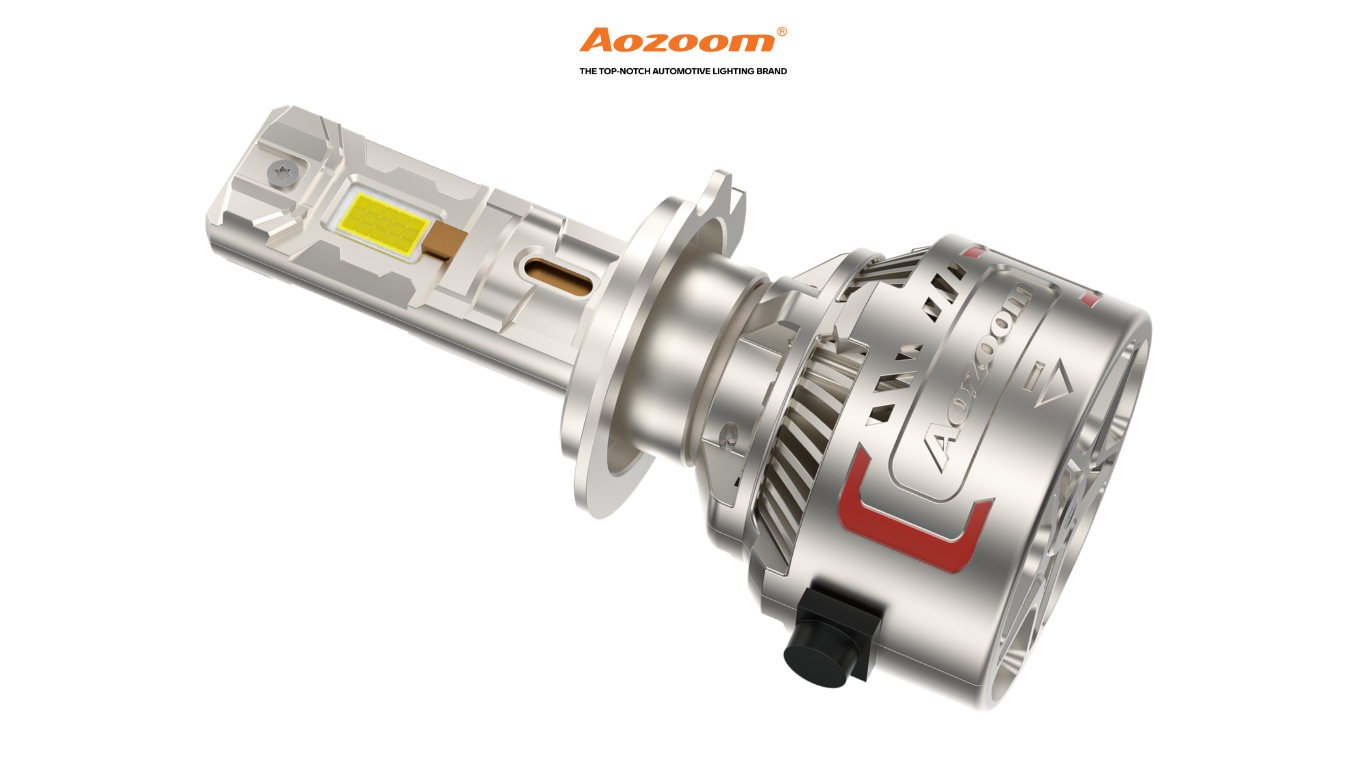
LED headlight bulbs are replaceable automotive light sources that use Light-Emitting Diodes (LEDs) to produce illumination. They are commonly offered in designs corresponding to conventional bulb types, such as H4, H7, H11, and HB3/HB4.
Unlike traditional Halogen bulbs, which generate light by heating a tungsten filament, LED bulbs use semiconductor chips to produce visible light.
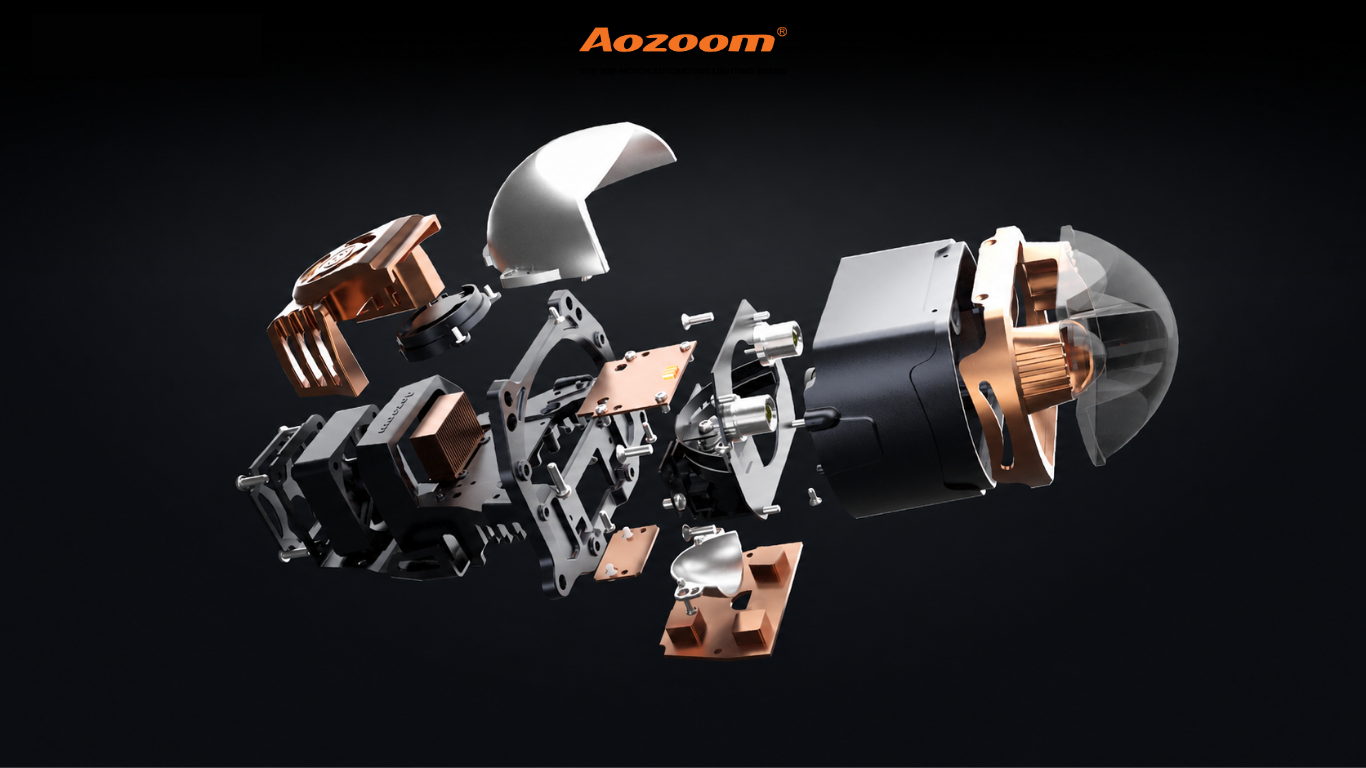
A typical automotive LED replacement bulb includes LED chips, a circuit board, a mounting base, an electronic driver, and a heat-dissipation system. Some designs also use a cooling fan.
LED replacement bulbs differ from complete LED headlight assemblies. A replacement bulb uses an existing headlight housing, while an integrated LED headlight is engineered around its own light source and optical components.
This distinction matters because the reflector or projector inside a headlight is designed to distribute light from a particular source.
An LED bulb may fit into a Halogen headlight socket without producing the correct beam pattern. Its suitability depends on how the LED emitters interact with the original optics, as well as the vehicle's electrical requirements and applicable regulations.
To explore the broader technology, read LED Headlights: How They Work, Types & Benefits.

LED headlight bulbs are replaceable automotive light sources that use Light-Emitting Diodes to produce illumination
What Are the Different Types of LED Headlight Bulbs?
LED headlight bulbs are commonly classified by their bulb type, mounting base, and intended lighting function.
These specifications determine which headlight assemblies they are designed to fit.
Common types include H4, H7, H11, HB3, and HB4. Although these bulbs all use LED technology in replacement applications, they differ in their physical interfaces and the functions they are intended to support.
H4 LED Headlight Bulbs
H4 LED headlight bulbs are designed for lighting arrangements that use a single bulb for both low-beam and high-beam functions.
A conventional H4 Halogen bulb contains two filaments: one for low beam and another for high beam.
An H4 LED replacement must reproduce the required low-beam and high-beam functions through its own LED emitter arrangement and design.
H4 bulbs are also commonly associated with the 9003 and HB2 designations, although the exact product specifications and applicable standards should still be checked.
When evaluating an H4 LED bulb, drivers should pay particular attention to both beam patterns. A bulb that produces an acceptable high beam may not necessarily provide proper low-beam distribution or glare control.
H7 LED Headlight Bulbs
H7 LED headlight bulbs are single-function replacement light sources used in headlight systems designed for the H7 bulb type.
Depending on the vehicle, an H7 bulb may serve either the low-beam or high-beam function.
Some vehicles use separate H7 bulbs for each function.
An H7 LED replacement must match the correct mounting arrangement and provide an appropriate light distribution within the existing housing.
Because some vehicles use dedicated mounting clips or adapters, a matching H7 base does not always guarantee straightforward installation.
Drivers should verify both the bulb specification and any vehicle-specific mounting requirements.
H11 LED Headlight Bulbs
H11 LED headlight bulbs are replacement light sources for compatible H11 lighting assemblies.
H11 bulbs are frequently used for low-beam headlights and certain front fog-light applications, depending on the vehicle.
These bulbs use a specific mounting and electrical connection arrangement.
Although H11 bulbs may appear similar to other types, such as H8 or H9, drivers should not assume that different bulb types are interchangeable.
The correct choice depends on the original application, electrical requirements, optical design, and the LED manufacturer's compatibility information.
For vehicles using H11 bulbs, drivers should confirm whether the replacement is intended for the relevant headlight or fog-light application.
HB3 and HB4 LED Headlight Bulbs
HB3 and HB4 are two common automotive bulb types, also widely identified as 9005 and 9006.
HB3 (9005) is commonly used for high-beam applications, while HB4 (9006) is often used for low-beam headlights or certain fog-light systems.
However, the actual function depends on the vehicle's lighting configuration.
HB3 and HB4 have different mounting and connection specifications and should not be treated as direct substitutes.
When choosing LED replacements, drivers should check the original bulb designation and verify that the product is designed for the relevant housing and function.
The table below summarizes these common bulb types.
Applications vary by vehicle. Always confirm the original bulb type and the replacement manufacturer's specifications before selecting a product.
These designations describe bulb interfaces and applications, not overall lighting quality. Two LED bulbs with the same base may still differ significantly in their optical performance, cooling design, and reliability.

LED headlight bulbs are commonly classified by their bulb type, mounting base, and intended lighting function
What Makes a Good LED Headlight Bulb?
A good LED headlight bulb should provide suitable illumination while operating reliably within a compatible lighting system.
Brightness is important, but it is only one part of overall performance.
The most useful evaluation considers beam distribution, color temperature, heat management, and electrical compatibility together.
Brightness and Beam Pattern
Brightness is often the first specification drivers compare when choosing LED headlight bulbs.
However, higher lumen output does not automatically mean better road visibility.
Lumens describe the amount of visible light produced, while lux describes the illumination reaching a particular surface.
For driving, the distribution of light on the road is especially important.
A suitable beam should illuminate relevant areas ahead of the vehicle without directing excessive light toward other road users.
Key characteristics include forward illumination, lateral coverage, balanced light distribution, and glare control.
For low beams, the intended cutoff and the amount of light above it are particularly important.
If the LED emitters do not align appropriately with the original housing optics, the resulting beam may contain dark areas, excessive scattered light, or poor distance coverage.
The Insurance Institute for Highway Safety (IIHS) evaluates vehicle headlights using measurements of road illumination and glare rather than brightness claims alone.
When comparing LED bulbs, drivers should therefore look for credible beam-pattern information or controlled testing in a compatible headlight assembly.
Color Temperature
Color temperature describes the appearance of light and is measured in Kelvin (K).
LED headlight bulbs are offered in different white-light color temperatures.
Common examples include:
A higher Kelvin rating does not mean a bulb produces more light.
Color temperature primarily affects how the illumination appears to the driver.
For everyday driving, drivers may prefer a neutral or moderately cool white appearance, but suitability should not be judged by color alone.
In heavy rain, mist, and other challenging conditions, visibility also depends on beam distribution, road reflections, and atmospheric scattering.
The best color temperature is not necessarily the highest Kelvin rating. The quality of the complete beam remains more important than its appearance.
Cooling System and Durability
LEDs generate heat during operation, even though they are generally more energy-efficient than conventional Halogen light sources.
Without adequate thermal management, excessive temperatures can reduce light output and accelerate component deterioration.
LED replacement bulbs commonly use two cooling approaches.
Passive Cooling
Passive designs use heat sinks and conductive materials to transfer heat away from the LED chips.
They do not require a cooling fan, but their effectiveness depends on heat-sink design and the available installation environment.
Active Cooling
Active designs incorporate fans to improve airflow around the heat-dissipation components.
This approach can be useful in certain compact or higher-power designs, although fan reliability, airflow clearance, and environmental exposure must also be considered.
Neither cooling method is automatically superior in every application.
A reliable LED bulb should maintain suitable operating temperatures under its intended conditions.
Drivers should evaluate the manufacturer's thermal design, product construction, operating specifications, and warranty rather than assuming a particular cooling system guarantees longer life.
LED Driver and Electrical Performance
The LED driver controls the electrical power supplied to the LED chips.
Its role is important because automotive electrical systems experience voltage variations during normal operation.
A suitable driver helps maintain appropriate electrical conditions and consistent LED operation.
Depending on the vehicle and product design, compatibility issues may include flickering, dashboard warnings, electronic lamp-monitoring errors, or interference with vehicle lighting functions.
Some LED replacement products use external drivers or additional electronic adapters.
Vehicles equipped with lamp-failure detection systems may require specific compatible components, often marketed as CANbus adapters.
However, these adapters do not guarantee universal electrical compatibility, and they cannot correct an unsuitable optical beam pattern.
Drivers should select products with documented electrical specifications and verify any additional component requirements before installation.

A good LED headlight bulb should provide suitable illumination while operating reliably within a compatible lighting system
How to Check LED Headlight Bulb Compatibility
LED headlight bulb compatibility involves more than matching the original bulb size.
A suitable replacement must fit the vehicle's headlight assembly, work with its optical system, meet its electrical requirements, and comply with applicable road-use regulations.
The following checks help drivers avoid common selection mistakes.
Identify the Correct Bulb Size
Start by identifying the original bulb type specified for the vehicle.
This information may be available in the owner's manual, the vehicle manufacturer's service documentation, or the markings on the original bulb.
Check the exact vehicle model, model year, and lighting configuration.
Different variants of the same vehicle may use different headlight assemblies or bulb types.
Also confirm whether the bulb serves the low-beam, high-beam, or another lighting function.
For example, a vehicle may use H7 bulbs for low beams and a different bulb type for high beams.
Once the original designation is confirmed, compare it with the replacement manufacturer's fitment information.
A matching bulb designation is the starting point, not the final compatibility check.
Check Headlight Housing Compatibility
The next step is to identify whether the vehicle uses a reflector or projector headlight assembly and whether the proposed LED replacement is suitable for that housing.
The optical components inside a headlight are designed around the position and shape of the original light source.
A Halogen filament and an LED emitter do not necessarily distribute light in the same way.
Even small differences in the position or orientation of the light source can affect the resulting beam.
An unsuitable replacement may produce uneven illumination or excessive glare, regardless of its advertised brightness.
Check whether the manufacturer provides compatibility information for the specific vehicle and headlight design.
For example, OSRAM's automotive lighting FAQ explains that its LED replacement bulbs have vehicle compatibility limitations and directs users to applicable fitment information.
After installation, the beam pattern and alignment should be evaluated using an appropriate method.
A visually sharp cutoff alone does not prove that an incompatible lighting modification is safe or legally compliant.
Verify Physical Fitment and Electrical Requirements
Even when the bulb base and optical application are suitable, the replacement must physically fit inside the headlight assembly.
LED bulbs may include heat sinks, fans, external drivers, or wiring that require additional space.
Drivers should check whether the installation allows proper mounting, sufficient cooling clearance, and correct closure of the headlight housing.
The original dust cover and weather sealing should not be compromised.
Electrical compatibility is equally important.
Confirm the product's operating voltage, connector requirements, power consumption, and compatibility with vehicle lighting controls.
Where necessary, verify whether the product manufacturer specifies an additional adapter.
For vehicles with complex electronic systems, a qualified automotive lighting technician can help assess the installation requirements.
These checks help determine whether an LED replacement can operate reliably without creating unnecessary fitment or electrical problems.

LED headlight bulb compatibility involves more than matching the original bulb size
How to Choose the Right LED Headlight Bulbs
The right LED headlight bulbs are those that match your vehicle's lighting system and provide suitable, controlled illumination for your driving needs.
Rather than choosing the highest wattage or lumen rating, start with compatibility and then compare product quality.
For drivers who regularly travel on poorly lit roads, useful forward illumination and high-beam performance may be especially important.
For everyday city driving, balanced low-beam coverage and effective glare control deserve particular attention.
In the Philippines and Malaysia, wet roads and heavy rainfall can make nighttime driving more challenging. A controlled beam pattern and proper headlight aiming matter more than choosing an excessively bright bulb.
Use this checklist when evaluating a potential replacement:
- Correct bulb type: Does it match the original H4, H7, H11, HB3, HB4, or other required specification?
- Optical compatibility: Is the product suitable for the existing reflector or projector housing?
- Lighting performance: Is there credible information about beam distribution, useful illumination, and glare control?
- Color temperature: Does the light appearance suit the intended application without relying on Kelvin alone?
- Thermal reliability: Is the cooling system appropriate for the bulb's power and installation environment?
- Electrical and physical fitment: Are the driver, connectors, mounting arrangement, and available space compatible?
- Road-use compliance: Is the specific installation permitted under the applicable local regulations?
Product documentation, vehicle-specific compatibility information, and credible lighting tests are more useful than unsupported claims about extreme brightness or universal fitment.
A correctly maintained original lighting system may also be preferable to an aftermarket replacement that has not been demonstrated to work properly with the vehicle.
Can You Replace Halogen Headlight Bulbs with LED?
Replacing Halogen headlight bulbs with LED alternatives may be technically possible, but it is not automatically compatible, safe, or legal for public-road use.
Some LED replacement bulbs are designed to fit conventional Halogen bulb interfaces. This can make installation physically straightforward in certain vehicles.
However, the original headlight assembly may have been engineered around the precise position and emission pattern of a Halogen filament.
If an LED replacement does not reproduce the appropriate light distribution, it can affect low-beam coverage, create uneven illumination, or increase glare.
In addition, the replacement must meet the vehicle's electrical and thermal requirements.
Drivers should therefore distinguish between a bulb that can be physically installed and a lighting system that operates appropriately and meets road-use requirements.
Philippines
Republic Act No. 4136 requires motor vehicle headlights to emit white or yellowish light and establishes requirements for their operation.
However, compliance with the specified headlight color does not by itself establish that an aftermarket LED conversion is approved.
Drivers should verify applicable Land Transportation Office requirements and any relevant vehicle modification or lighting standards before making changes.
Malaysia
Malaysia's Road Transport Department (JPJ) provides specific guidance on front-lighting modifications.
Its technical FAQ states that retrofitted white front lighting, when not installed by the vehicle manufacturer, is not permitted under the referenced requirements.
Drivers should therefore not assume that replacing a factory Halogen bulb with a white LED bulb is allowed simply because the new bulb fits or produces a controlled beam.
Before proceeding, verify the current requirements and any applicable approvals directly with JPJ.
When a replacement bulb is unsuitable or not approved, retaining the original system or considering another compliant lighting solution may be more appropriate.
Conclusion
Choosing the right LED headlight bulbs requires more than selecting the correct socket type or the highest brightness specification.
H4, H7, H11, HB3, and HB4 bulbs serve different lighting arrangements, and each replacement must be evaluated against the vehicle's original requirements.
The most important factors are bulb compatibility, controlled beam performance, effective thermal management, electrical reliability, and compliance with local regulations.
A suitable lighting solution should provide useful road illumination without compromising the intended operation of the headlight system or the visibility of other road users.