Projector Headlights: How They Work, Types & Benefits
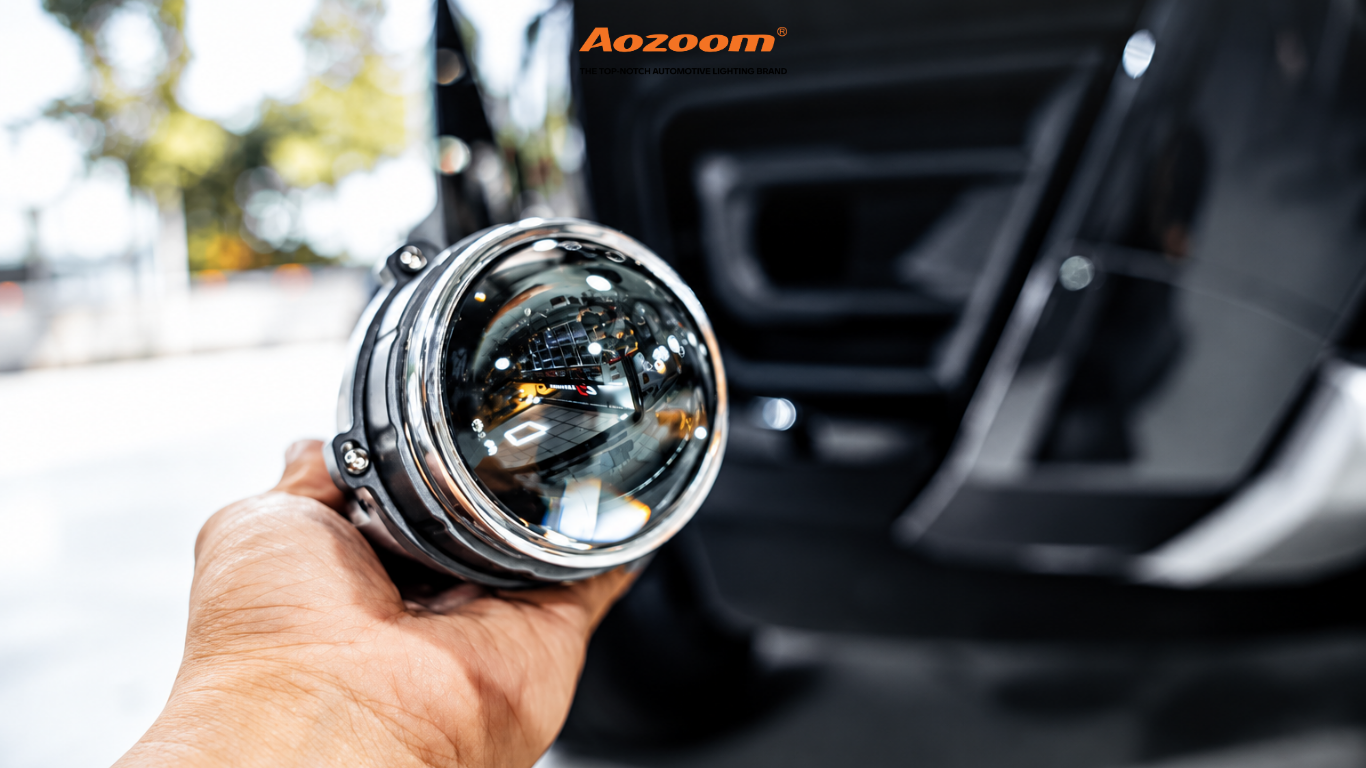
Projector headlights are a type of automotive lighting system designed to control how light is directed onto the road. By combining a light source with precisely engineered optical components, projector headlights can create defined beam patterns and distribute illumination to specific areas.
Today, projector technology is used with Halogen, HID/Xenon, and LED light sources, including advanced Bi-LED and laser-assisted systems. However, the performance of a projector depends on more than the type of light it uses.
Understanding how projector optics work can help drivers evaluate lighting quality, recognize the differences between headlight technologies, and make more informed decisions about their vehicles.
In this guide, AOZOOM explores how projector headlights work, the different types available, and the factors that influence their real-world performance.
What Are Projector Headlights?
Projector headlights are automotive headlight systems that use a dedicated optical arrangement, typically including a reflector and projection lens, to shape and direct light onto the road.
Unlike conventional reflector headlights, which primarily use reflective surfaces to produce the required beam distribution, projector headlights use a lens-based optical system to project a controlled pattern of illumination.
A typical projector also includes a shield or other beam-shaping elements to manage the low-beam cutoff and limit unwanted upward light.
One important distinction is that projector technology refers to the optical system, not the light source itself.
Projector headlights can operate with different lighting technologies:
- Halogen: Produces light through a heated tungsten filament.
- HID/Xenon: Generates light through an electrical discharge.
- LED: Uses semiconductor light-emitting diodes.
Each technology has different operating characteristics, but all can be incorporated into projector-based optical systems.
The purpose of the projector is to control where the light travels and how it is distributed, helping the headlight provide useful road illumination while managing glare.
For a broader explanation of automotive lighting systems, explore Car Headlights: A Complete Guide to Types & Technologies.
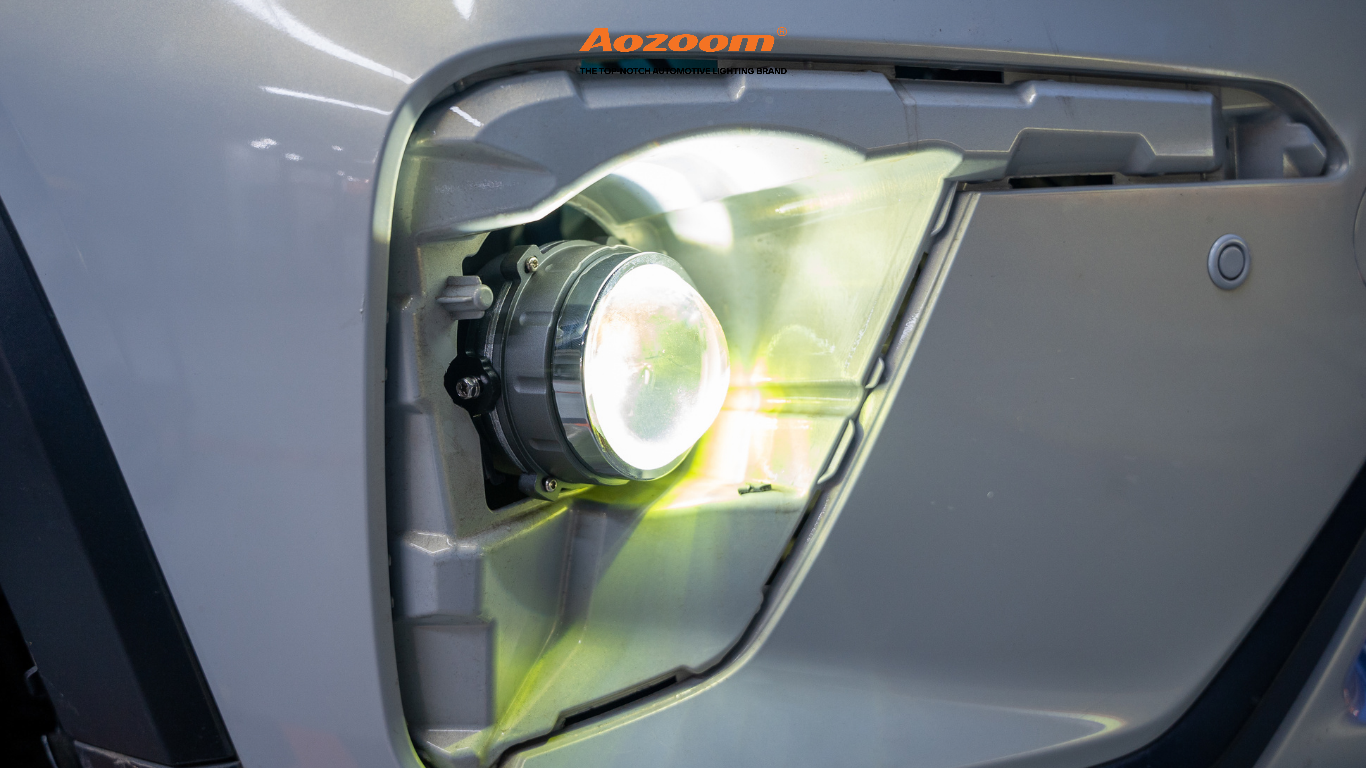
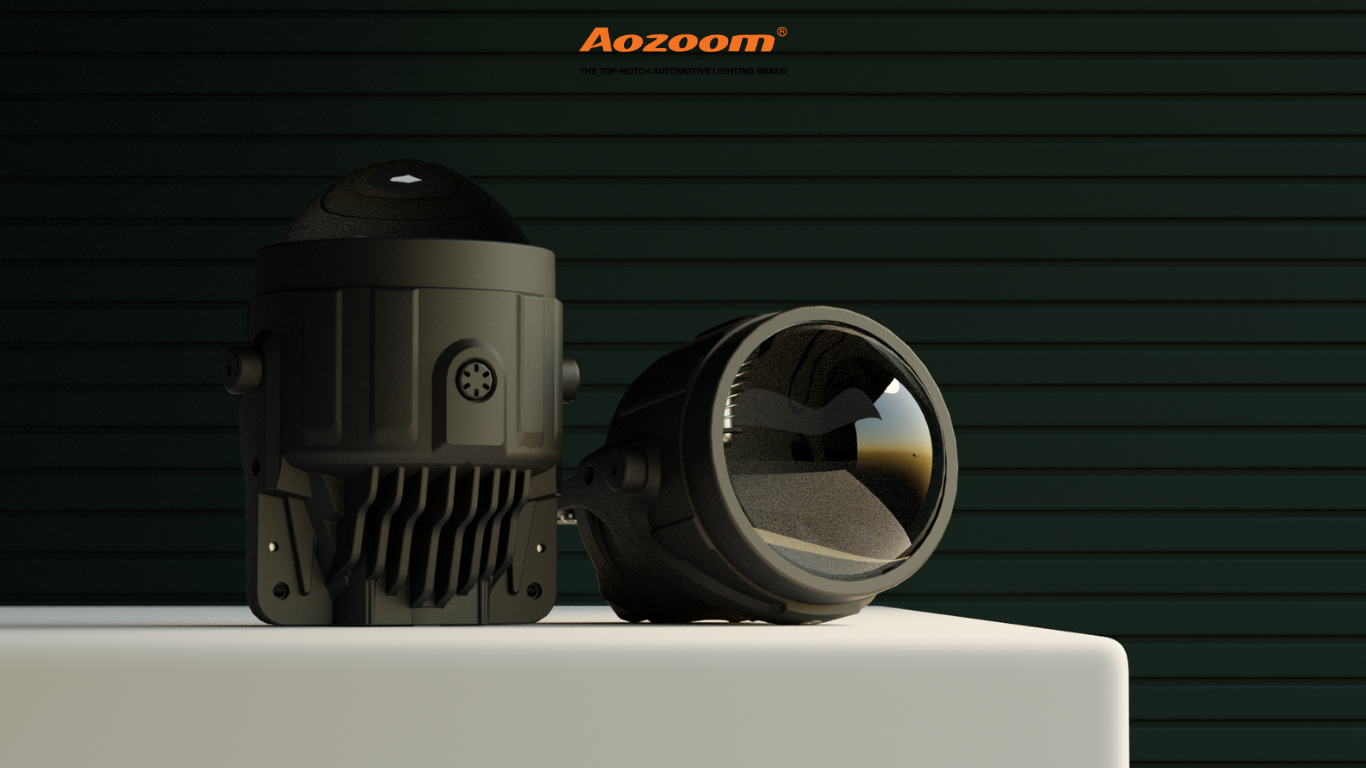
Projector headlights are a type of automotive lighting system that uses a lens-based design to focus and direct light onto the road
How Do Projector Headlights Work?
Projector headlights work by collecting light from a source, shaping it through optical components, and projecting the resulting beam onto the road.
This process allows engineers to control important characteristics such as beam width, forward illumination, light distribution, and the low-beam cutoff.
Although projector designs vary, many conventional systems follow similar optical principles.
Main Components of Projector Headlights
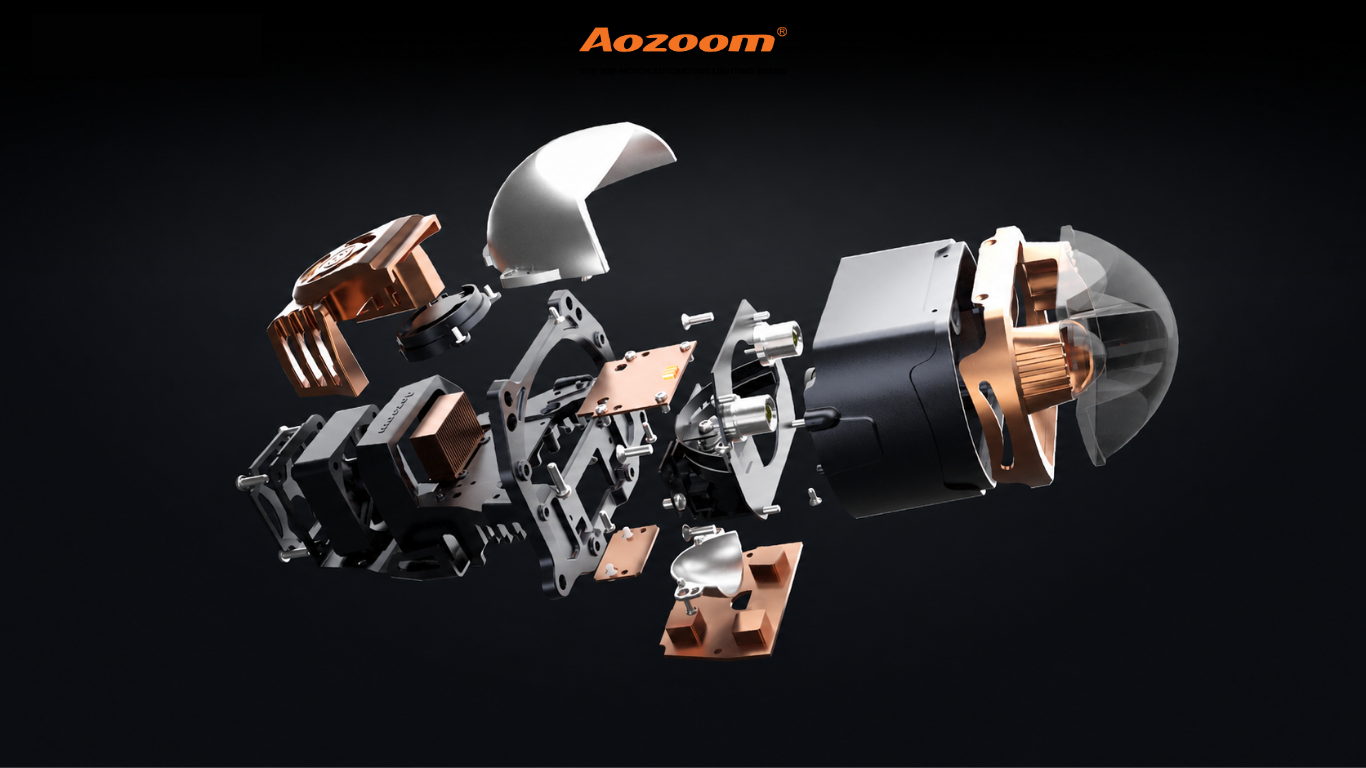
A typical projector headlight contains four main optical components.
1. Light Source
The light source generates the illumination used by the projector.
Depending on the system, this may be a Halogen bulb, an HID/Xenon lamp, or one or more LED chips.
The source's position, emission characteristics, and output influence how effectively the optical system can collect and distribute light.
2. Reflector
The reflector collects light from the source and redirects it toward the remaining optical components.
Its curved or specially shaped reflective surfaces help control how light enters the projector's beam-forming region.
Reflector geometry is important because it influences light collection, efficiency, and the resulting beam distribution.
3. Shield
In many projector headlights, a shield is positioned within the optical path to block selected portions of the light.
This helps create the characteristic low-beam cutoff, reducing the amount of light projected into areas where it could cause glare.
Some dual-function projectors use a movable shield, also called a shutter, to switch between low-beam and high-beam operation.
However, not every projector uses the same shield arrangement.
4. Projector Lens
The projector lens directs the shaped light outward, producing the designed beam pattern.
Working together with the reflector and shield, the lens helps establish how illumination is distributed in front of the vehicle.
The lens does not independently determine lighting quality. Its performance depends on the complete optical system.
How Projector Optics Shape the Light Beam
In a conventional projector design, light first travels from the source toward the reflector.
The reflector collects and redirects that light into the beam-forming region, where the shield or other optical elements control which portions continue toward the lens.
The lens then projects the designed light distribution onto the road.
For low-beam operation, the shield can create a defined boundary between the illuminated area and the darker region above it.
This boundary is known as the cutoff line.
A properly engineered cutoff helps direct useful illumination toward the road while limiting excessive light toward oncoming drivers.
In a dual-function projector, changing the position of a movable shield can allow more light to pass through the optical system for high-beam operation. Other designs use separate emitters or optical paths to produce different beam functions.
Importantly, the final beam is not determined by the lens alone.
The relationship between the light source, reflector geometry, shield, and lens determines how effectively a projector controls illumination.
This is why projectors with similar external appearances can produce noticeably different lighting results.
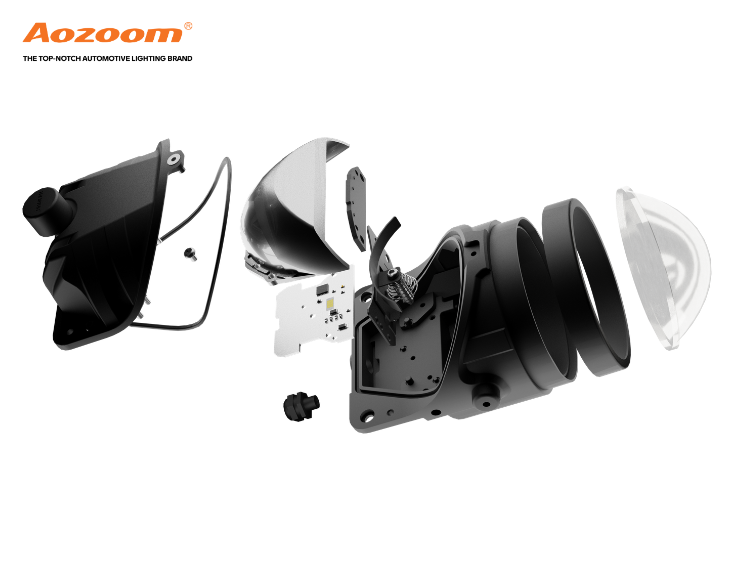
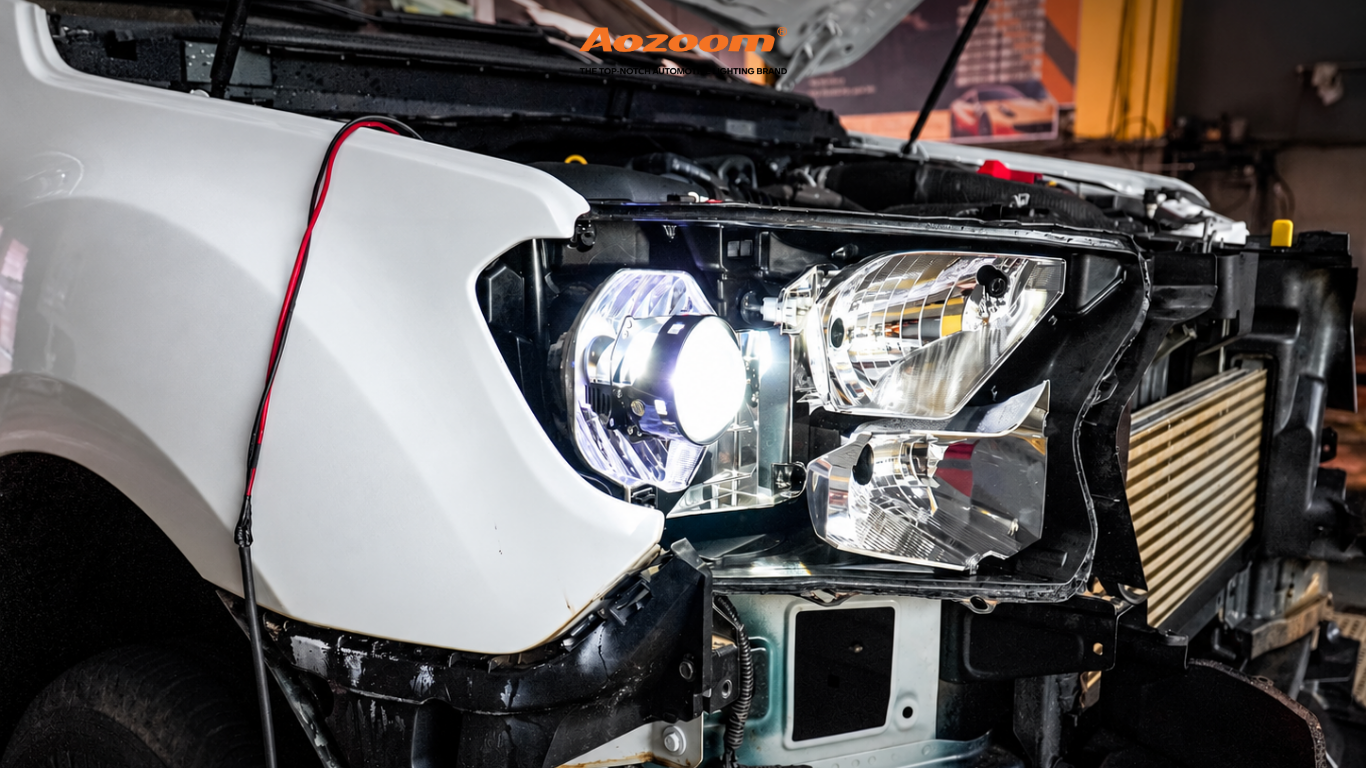
Projector headlights focus and control light using a specialized internal optical system rather than bouncing it freely off a wide, open mirror
What Are the Different Types of Projector Headlights?
Projector headlights can be classified according to their light-source technology and lighting functions.
The main categories include Halogen, HID/Xenon, and LED projector headlights. More advanced designs may also combine low-beam and high-beam functions or incorporate laser-assisted illumination.
Halogen Projector Headlights
Halogen projector headlights use conventional Halogen bulbs within a projector optical system.
The Halogen bulb produces light by heating a tungsten filament, while the projector's reflector, shield, and lens control how that light reaches the road.
Compared with a traditional Halogen reflector headlight, a Halogen projector uses a different optical arrangement to create its beam pattern.
However, it retains the operating characteristics of Halogen technology, including relatively high heat generation and generally lower energy efficiency than modern LED systems.
Halogen projectors remain an example of how projector optics can function independently of LED technology.
HID / Xenon Projector Headlights
HID projector headlights use High-Intensity Discharge lamps, commonly called Xenon headlights, together with projector optics.
Unlike Halogen bulbs, HID lamps produce light through an electrical discharge between electrodes.
These systems require a ballast to manage lamp operation.
HID projector headlights combine this light source with optical components designed to distribute illumination and control the beam.
Some HID projector systems support both low-beam and high-beam functions through a movable shutter. These are commonly called Bi-Xenon projectors.
HID technology can provide efficient illumination compared with conventional Halogen lighting, but its operation requires dedicated electronic components and a warm-up period.
The actual performance depends on the lamp, ballast, projector design, and overall system condition.
LED Projector Headlights
LED projector headlights use Light-Emitting Diodes as their light source within a dedicated projector optical system.
LED technology offers near-instant illumination, efficient light generation, and flexible integration into compact optical designs.
Because LED emitters can be arranged in different configurations, manufacturers can develop projector systems with specialized light distributions and electronic controls.
A typical LED projector integrates LED chips with reflectors or other optics, a projection lens, an electronic driver, and thermal management components.
However, an LED source does not automatically guarantee better lighting performance.
Effective beam distribution, cooling, and optical alignment remain essential.
Bi-LED and Laser-Assisted Projector Systems
More advanced projector headlights combine multiple lighting functions within a single module or introduce additional light sources for specific applications.
Bi-LED Projector Headlights
A Bi-LED projector uses LED technology to provide both low-beam and high-beam illumination within one system.
Depending on its design, it may use a movable shutter, separate LED emitters, or dedicated optical paths to produce the two beam patterns.
The term Bi-LED describes this combination of LED technology and dual-beam functionality, rather than a completely different category of light source.
Laser-Assisted Projector Headlights
Laser-assisted systems use specialized light-source technology to provide additional illumination, often supporting long-range high-beam performance.
In automotive laser lighting, blue laser light is converted into white light using a phosphor material before the resulting illumination is directed through the optical system.
The laser beam itself is not projected directly onto the road.
Some Bi-Laser systems combine conventional LED illumination with laser-assisted high-beam support.
These systems are designed for particular performance requirements and should be evaluated through their actual beam distribution rather than the presence of laser technology alone.
Although these projector systems differ in their light sources and functions, optical design remains central to their ability to produce useful, controlled illumination.
Projector vs Reflector Headlights: What's the Difference?
The main difference between projector and reflector headlights lies in how their optical systems collect, shape, and distribute light.
Reflector headlights use specially shaped reflective surfaces to direct light toward the road.
Projector headlights combine reflective or other optical elements with a projection lens, typically incorporating additional beam-shaping components.
Both designs can be engineered to provide effective illumination, but they use different approaches to controlling the beam.
Feature | Projector Headlights | Reflector Headlights |
Optical design | Reflector or beam-forming optics with a projection lens | Reflective surfaces shape and distribute light |
Light exit | Typically concentrated through a lens | Usually distributed across a larger reflective area |
Beam control | Lens and optical elements work together to shape the beam | Primarily controlled by reflector geometry |
Cutoff formation | Often uses a shield or other beam-shaping elements | Can use precisely designed reflector surfaces |
Construction | Generally more complex | Often simpler, depending on design |
Light-source options | Halogen, HID, LED | Halogen, HID, LED |
Performance | Depends on complete optical design and alignment | Depends on complete optical design and alignment |
Projector headlights are often associated with a defined low-beam cutoff and a compact lens appearance.
However, modern reflector headlights can also produce carefully controlled beam patterns.
Projector headlights are not automatically brighter, safer, or better than reflector headlights.
A well-engineered reflector headlight may outperform a poorly designed projector.
The most meaningful comparison is therefore the quality of the complete headlight system, including its beam pattern, useful road illumination, and glare control.
Advantages and Disadvantages of Projector Headlights
Projector headlights offer several optical design advantages, but their performance also depends on construction quality, compatibility, and installation.
Advantages of Projector Headlights
Controlled Beam Distribution
Projector optics allow engineers to shape the light distribution using coordinated optical components.
This can help direct illumination toward relevant road areas while limiting unwanted light in other directions.
Defined Low-Beam Cutoff
Many projector systems use shields or other optical elements to create a controlled cutoff line.
When properly designed and aligned, this helps manage upward light and reduce potential glare for oncoming traffic.
Flexible Light-Source Integration
Projector technology can work with Halogen, HID, and LED light sources.
It also supports different configurations, including dual-function projectors and specialized high-beam systems.
Compact Optical Design
The characteristic projection lens allows engineers to create lighting systems with a relatively compact light-emitting aperture.
This provides design flexibility for different vehicle headlight assemblies.
Disadvantages of Projector Headlights
More Complex Construction
Projector systems generally require multiple precisely positioned optical components.
This can make their design, manufacturing, maintenance, or replacement more complex than simpler reflector arrangements.
Potentially Higher Costs
Depending on the technology, projector headlights may cost more than conventional lighting systems.
Advanced LED, electronic control, or laser-assisted components can further increase system costs.
Light-Source Compatibility Limitations
Projector optics are engineered around specific light-source characteristics.
Replacing a Halogen or HID bulb with an incompatible LED alternative may change the beam distribution and create unwanted glare or dark areas.
Sensitivity to Installation and Alignment
A projector can produce an unsuitable beam if it is incorrectly mounted, tilted, or aimed.
Even high-quality optical components require correct installation to deliver their intended performance.
Overall, the benefits of projector headlights come from their ability to control light through optical engineering, not simply from having a lens or using a particular light source.
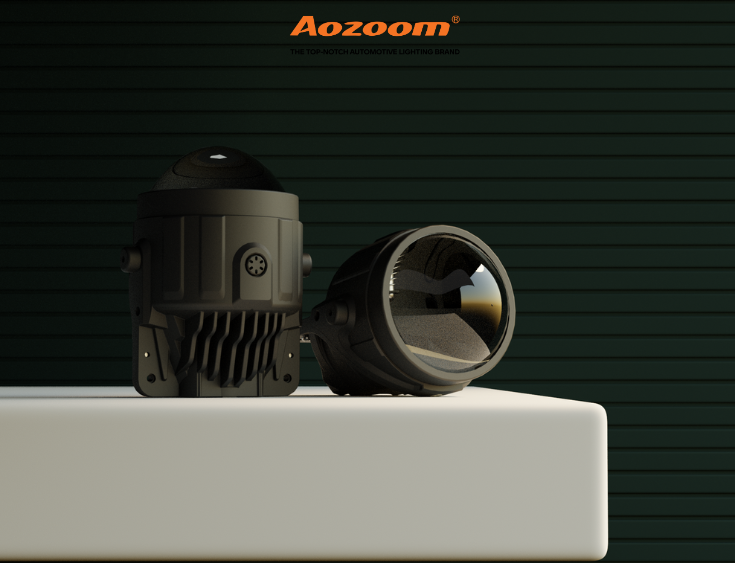
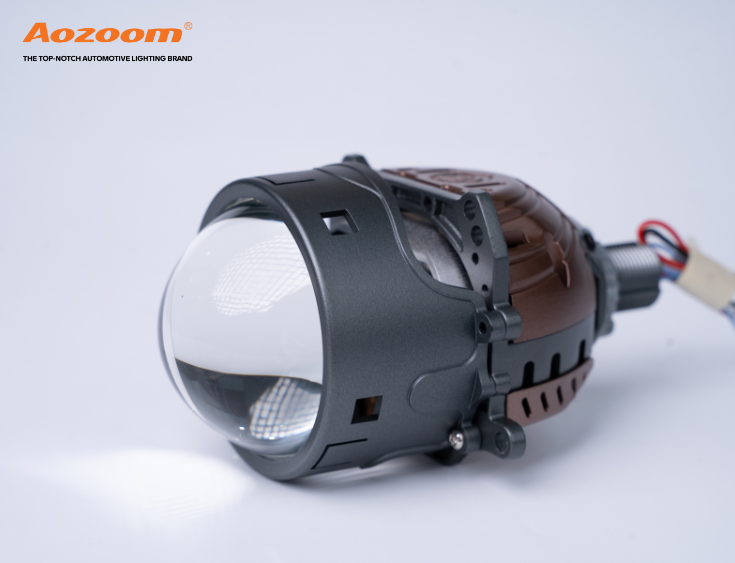
Projector headlights use a specialized assembly featuring a bulb, a reflective bowl, a cutoff shield, and a convex lens to focus light into a sharp, controlled beam
What Determines Projector Headlight Performance?
Projector headlight performance depends on how effectively the complete system delivers useful illumination to the road while controlling glare.
Brightness and electrical power are only part of this evaluation.
Optical design, beam distribution, cutoff characteristics, light-source quality, thermal management, and alignment all influence real-world results.
Optical Design and Beam Distribution
The optical design determines how light is collected and directed toward different areas of the road.
A projector should provide useful illumination at appropriate distances while maintaining sufficient coverage of the driving environment.
Three important characteristics are:
Beam Width
Beam width describes the lateral spread of illumination.
Appropriate coverage helps drivers observe the road surface, lane boundaries, and surrounding areas.
However, a wider beam is not automatically better if insufficient light reaches important distances ahead.
Hotspot
The hotspot is an area of relatively concentrated illumination within the beam.
Its position and intensity influence how the projector supports forward visibility.
A stronger hotspot may help illuminate particular distances, but overall performance still depends on the surrounding beam distribution.
Light Uniformity
Uniformity describes how smoothly illumination changes across the beam.
Excessively bright regions, dark spots, or abrupt variations can make the illuminated scene less consistent.
A balanced distribution should provide useful light where drivers need it without unnecessary concentration or scattering.
Different projector designs can prioritize these characteristics in different ways.
Cutoff Line and Glare Control
The cutoff line is one of the most recognizable characteristics of many projector low-beam systems.
It separates the principal illuminated region from the darker area above.
A properly designed cutoff helps direct light toward the road while limiting illumination that could reach the eyes of oncoming drivers.
However, cutoff sharpness alone does not determine headlight quality.
A projector can produce a clearly defined cutoff while still delivering insufficient illumination in important areas or excessive light in others.
Glare control depends on the entire beam distribution, as well as headlight alignment and vehicle installation.
The Insurance Institute for Highway Safety (IIHS) evaluates headlight systems by measuring road illumination on straight sections and curves while also assessing glare toward oncoming drivers.
This approach demonstrates why useful road visibility and glare control must be evaluated together.
Light Source and Thermal Management
The light source influences how much illumination is available and how efficiently the projector can operate.
However, wattage and advertised lumen output do not independently determine how effectively light reaches the road.
The complete optical system determines the distribution of that illumination.
For example, a higher-power source may produce more light, but poor optical design can direct some of it into less useful areas.
Thermal management also affects long-term performance.
LED projector systems generate heat that must be dissipated through suitable cooling components.
Excessive operating temperatures can reduce LED efficiency and accelerate component degradation.
HID systems have different electrical and thermal requirements, including ballast operation and lamp characteristics.
Halogen systems must accommodate substantial heat from their filament-based light sources.
Reliable projector performance requires the light source, optical components, electronics, and thermal design to function together.

Projector headlight performance depends on a combination of optical design, internal components, light source matching, and proper alignment
Conclusion
Projector headlights use dedicated optical systems to collect, shape, and project illumination onto the road.
By combining components such as reflectors, shields, and lenses, projector technology allows engineers to develop controlled beam patterns for different automotive lighting applications.
From Halogen and HID projectors to LED, Bi-LED, and laser-assisted systems, each configuration combines its light source with a particular optical design.
However, the effectiveness of a projector headlight depends on more than its technology, wattage, or external appearance.
Optical design, beam distribution, cutoff control, thermal management, and proper alignment are the key factors that determine lighting performance.
Understanding these principles helps drivers evaluate projector headlights more accurately and recognize why a well-designed lighting system matters more than simply choosing a brighter source.